Wealth taxes are pure “slopulism”
History shows that wealth taxes don't work. So why are we still talking about them?

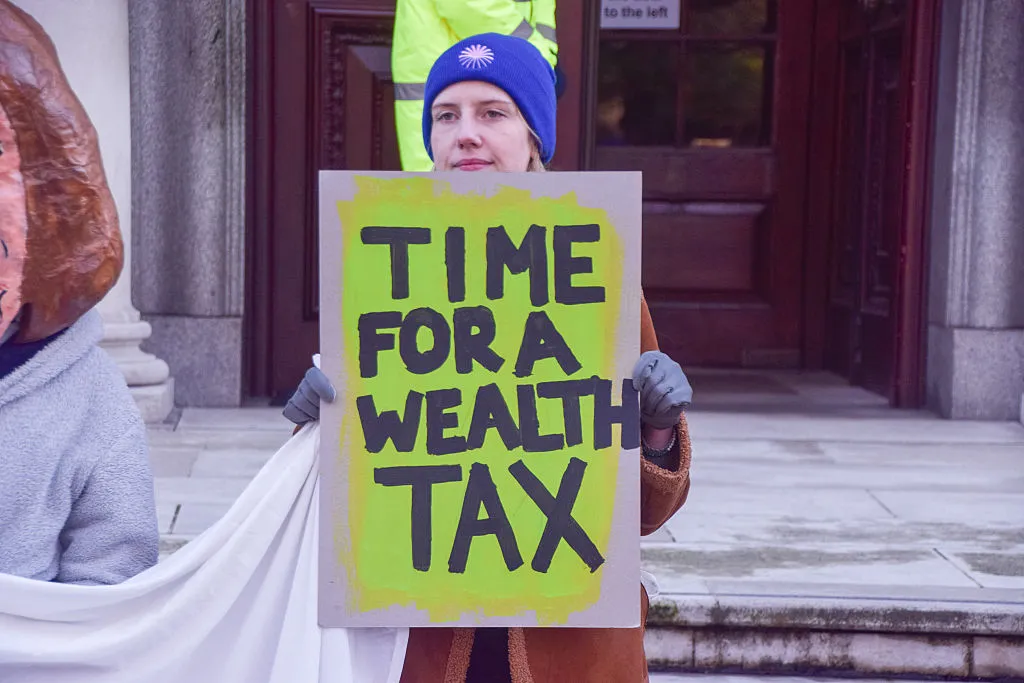
Gary Stevenson, a gobby former City trader turned socialist firebrand, known for his advocacy of a wealth tax and “for dressing like a 16-year-old scally despite being a 39-year-old man”, as Christopher Snowdon puts it in The Critic, was briefly all over the news during the silly season, when Parliament was in recess, and there was hence nothing better for political hacks to talk about.
Stevenson's perhaps most stunning achievement was to make and present a Channel 4 documentary about himself and his ideas in which he allowed his arguments to get severely and embarrassingly bested by people who know what they're talking about. His five minutes of fame ended with his early retirement from social media, citing burnout and exhaustion.

Former financial trader and author Gary Stevenson is a fan of a wealth tax
The big issue with wealth taxes
Sadly, his ideas have a bit more life in them yet, and for a simple reason – Andy Burnham, the new prime minister, is sniffing around for more money to fund his spending commitments. Where the cash will come from is, as Gerard Lyons says in The Times, the “defining fiscal question” of the present moment. Most economists rule out imposing wealth taxes as a solution to that problem, and for good reasons. But politicians are prone to forget sound economics when they have more pressing problems to deal with, such as huge fiscal holes to fill and political constituencies to placate.
Start your trial of MoneyWeek today
Get unparalleled financial insight, analysis and expert opinion you can profit from.

Sign up for MoneyWeek’s free twice-daily newsletter.
Join more than 165,000 subscribers and keep yourself informed with latest financial news, insights and expert analysis to help you understand what really matters when it comes to your finances.
Join more than 165,000 subscribers and keep yourself informed with latest financial news, insights and expert analysis to help you understand what really matters when it comes to your finances.
Chancellor John Healey, now preparing his first budget for delivery at the end of October, has pointedly refused to rule out tax rises and faces the challenge of rebuilding a fiscal buffer eroded by the Iran war and weak growth while funding new spending commitments from a prime minister whose premiership so far seems distinguished mostly by his inability to see a spending commitment he doesn't like.
Healey's options are limited. The Office for Budget Responsibility is unlikely to upgrade its forecasts for economic growth or future tax revenues, and borrowing more will not be easy. Gilt issuance is already around £250 billion this fiscal year and debt servicing costs are on the rise. And Labour's manifesto commitments rule out increases in any of the main taxes. Attention has thus long been shifting to wealth and other taxes, presented as a simple way out of the predicament.
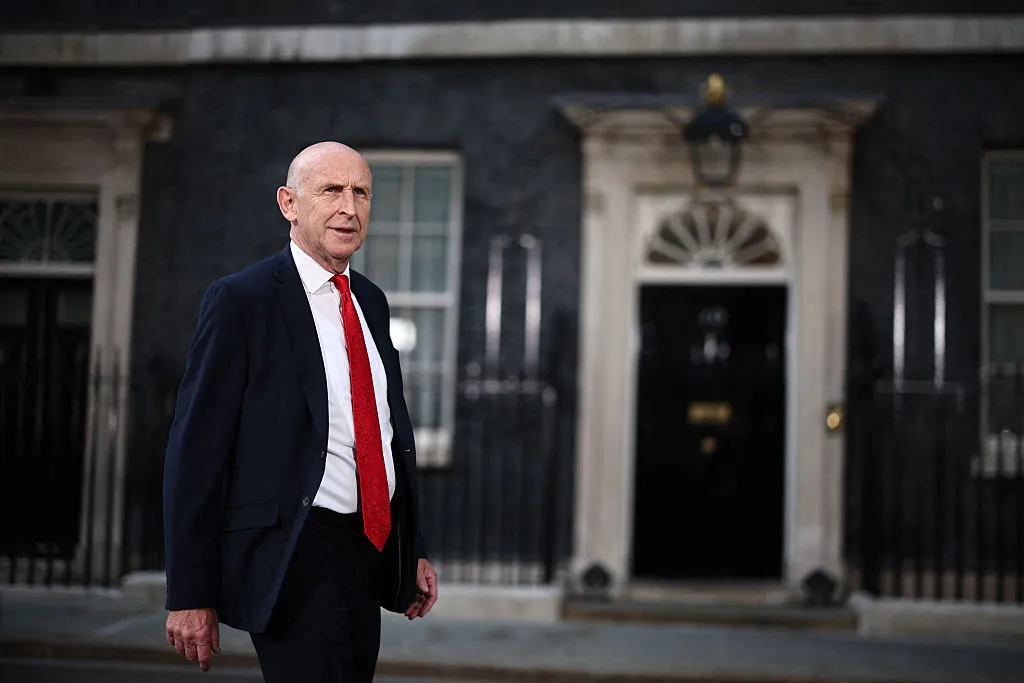
The chancellor, John Healey, has limited options
“They are not,” as Lyons says. Modern tax systems have evolved in the way they have because governments need “large, reliable and predictable” sources of revenue. That consideration means that revenues generally come primarily from taxing recurring flows of income, profits and spending. Such taxes generate around four-fifths of tax revenues across the OECD club of developed nations. Wealth taxes depart from this principle, seeking to draw income from a stock of wealth held in assets rather than from flows – and that is far easier said than done. Countries that have tried to impose them have usually ended up abandoning them. Where they remain, they have simply become another burden, not on idle wealth, but “on entrepreneurs, business owners and productive capital”.
Supporters of a wealth tax often cite the Wealth Tax Commission, the report of a group of independent experts tasked with studying the feasibility and impact of a wealth tax, but its own research undermines the case, says Lyons. Even at a tax rate of just 1%, the Commission estimated that behavioural responses could shrink the tax base by between 7% and 17%. “Many people are asset rich but cash poor. A tax that is detached from recurring cash flow eventually forces borrowing or the sale of assets simply to pay the tax. It alters behaviour, depresses asset values and adds administrative complexity.”
Why are wealth taxes so popular?
It is easy to portray those who oppose a wealth tax as “bootlickers for the haves and the have-yachts”, says Snowdon, but “the reason most economists are dismissive of the idea is the same reason governments of both right and left have abandoned them over the years: they are costly to administer, don't raise much money and drive talent out of the country”. What most people who advocate soaking the rich don't realise is that the money of the very wealthy is “not just sitting there in a bank account”. It is invested in shares, the value of which fluctuates daily and can spike or collapse dramatically. It is invested in property and possessions, the value of which is not known until they are sold. And in the case of people who technically own £10 million or more, it is the value of the businesses that they founded and own, the price of which is also not known until they are put up for sale.
The first task of a government that wants to introduce a wealth tax is to calculate how much wealth people have, but this is therefore an inevitably expensive and bureaucratic exercise requiring many arbitrary decisions that are open to challenge by those being assessed, says Snowdon. And that's just the start of the problems. In 1990, 12 OECD countries had a wealth tax. Today, there are only three. Norway and Switzerland use them as substitutes for inheritance and capital-gains taxes, and Spain's is “so full of holes that what remains can be considered largely symbolic”: it raises so little revenue that most fiscal accounts do not even bother to list it. In short, it soon dawns on governments that try to introduce them that wealth taxes are simply not worth the bother.
Why then are we still talking about them? Mainly because “more sensible proposals take five minutes to explain and therefore have little chance of being adopted in the current political environment”, says Joseph Heath, an academic philosopher writing on Substack. The main merit of the idea of wealth taxes for those on the left is that they are very easy to explain: “Billionaires are bad, so let's take away their money!” Wealth taxes are, in other words, a perfect example of “slopulism” – “policy ideas that make for quick, effective soundbites”, but that are useless and “almost universally rejected by experts”.
It is not even necessary to take a position on whether inequality is a big problem that we must deal with to see this. Perhaps you think it is. Even if so, there is nothing a wealth tax can accomplish towards whatever end you have in view that can't already be accomplished through the current tax system – that is, by taxing capital income. Some might say that this does not capture the increase in value of the stock of wealth when those assets earn a return or appreciate in value, but that is just an argument for treating the increase as income and taxing it – as happens already. All income derived from wealth in the form of dividends, interest payments and capital gains must be declared as income. The principle, as already stated, remains to tax the flow, not the stock of wealth. “For people who are angry about the Elon Musks and Peter Thiels of the world, a wealth tax offers the most immediate and intuitive way of channelling that anger. Unfortunately, the desire to punish one's enemies is not a sound basis for tax policy.”

Heath was talking about the situation in the US, but it is hardly very different here in the UK. Given that unfortunate fact, what we can expect from the current government in terms of tax policy? Nothing very pretty. Imagine you are a politician who does not believe in wealth taxes, but who wants to be popular with people who do, says Kristian Niemietz on Substack. You know wealth taxes don't work, you have economic advisers who tell you so, and you know they are usually more trouble than they are worth. But at the same time, you believe that the Gary Stevensons of this world have won the argument and, in any case, you need revenue sooner rather than later. What would you do? You would probably, says Niemietz, come up with “all sorts of policies that mimic aspects of what a wealth tax is supposed to do, without being a wealth tax proper”.
That would explain a lot of otherwise puzzling moves by the current government – why, for example, we have seen increases in the rates for capital gains taxes while tax-free allowances have been cut; why landlords face higher rates on rental income and higher stamp duty land tax rates; why we will see a “mansion tax”, a council-tax surcharge for properties worth more than £2 million. Polls show that such reforms are popular with the public. They might not be so popular when the consequences come home.
All such changes will probably decrease savings, investment and wealth generation while raising only minor amounts of additional revenue, as Niemietz points out. But other consequences will be more immediate, visible and intrusive. The government plans, for example, to send tax inspectors around the country to value homes believed to be in the price range of the mansion tax. Those inspectors will have powers to demand entry into people's homes so that they can conduct a valuation. This may seem to be an intrusion into the private sphere and a violation of civil liberties, but it is an inevitable consequence of the bureaucratic process of valuing wealth that hasn't yet been sold in order to impose wealth taxes. “If this sounds like a terribly inefficient way of raising money to you, just imagine what an actual wealth tax, which does the same thing for assets across the board, would be like.”
Policymakers need to heed the lessons of history
The popular support for higher rates and wealth taxes may not be all it seems either, says Viggo Terling, also in The Critic. Westminster has “convinced itself that the public is desperate to tax the rich harder”. But new polling conducted by the Adam Smith Institute suggests otherwise. True, asked whether they support a wealth tax, 61% of voters say yes. But told additionally that such a tax could drive high-net-worth individuals abroad and reduce the money available for public services, support plummets to 37%.
Voters should be capable of doing the maths themselves. The top 10% of earners contribute 60% of all income-tax revenue. If enough net contributors flee Britain to escape an ever-increasing tax burden, the resulting bill will land on everyone else, either in the form of higher taxes or worse public services, says Terling. Worryingly, the millionaire exodus seems already to have begun. Britain now has 442,000 sterling millionaires, down 7% since 2024 and the lowest number since the financial crisis. Britain's tax burden is already testing post-war highs – a level the Office for Budget Responsibility has called “uncharted territory” – and imposing new wealth taxes and leaving tax thresholds unchanged will change incentives dangerously for the super-rich and workers alike.
Today, earning between £100,000 and £125,140 can leave you facing an effective marginal income-tax rate of 60%. Yet 81% of the public agree that people should be able to keep more of what they earn and pass it on to their children. “That is about as close as Britain comes to a settled moral position on tax, and no major party currently builds its policy around it.”
It's beyond time that policymakers heeded the lessons of history and stopped “wasting public resources reviving failed ideas, especially ones that are more about political signalling than devising meaningful solutions”, says Cristina Enache for Project Syndicate. “To restore public confidence in our political and economic system, we should instead focus on fostering growth and expanding opportunity – on building the bottom up, not tearing the top down.”
This article was first published in MoneyWeek's magazine. Enjoy exclusive early access to news, opinion and analysis from our team of financial experts with a MoneyWeek subscription.
Join more than 165,000 subscribers and keep yourself informed with the latest financial news, insights and expert analysis to help you understand what really matters when it comes to your finances.

Stuart graduated from the University of Leeds with an honours degree in biochemistry and molecular biology, and from Bath Spa University College with a postgraduate diploma in creative writing.
He started his career in journalism working on newspapers and magazines for the medical profession before joining MoneyWeek shortly after its first issue appeared in November 2000. He has worked for the magazine ever since, and is now the deputy editor.
He has long had an interest in political economy and philosophy and writes occasional think pieces on this theme for the magazine, as well as a weekly round up of the best blogs in finance.
His work has appeared in The Lancet and The Idler and in numerous other small-press and online publications.