Four money books to read in 2026
Here are the top money books that you should read in 2026 – as recommended by the MoneyWeek team
As we step into 2026, there’s no better time to take control of your finances, learn how investing works and set yourself up for a successful year.
Books can play a huge role in helping you build wealth and manage your money more effectively – but with so many finance books out there, how do you pick which ones should go on your reading list?
To help you choose, the MoneyWeek team has hand-picked a selection of books that we think you should read – there’s something for everyone.
MoneyWeek
Subscribe to MoneyWeek today and get your first six magazine issues absolutely FREE
Sign up to Money Morning
Don't miss the latest investment and personal finances news, market analysis, plus money-saving tips with our free twice-daily newsletter
Here are the top money books of 2026.
We look at where to invest and the key money dates for the year ahead in a separate guide.
Four money books for 2026
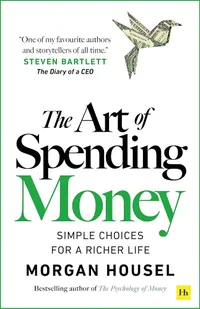
Book: The Art of Spending It
Author: Morgan Housel
Recommended by: Kalpana Fitzpatrick, digital editor
Morgan Housel, who is also the author of one of my other favourite books, The Psychology of Money, is great at making you understand your relationship with money, which in turn can help you manage your finances better.
This is a great read if you want to understand your spending habits, the triggers that perhaps make you overspend or why you could be spending your money the wrong way. This is a must read for everyone.
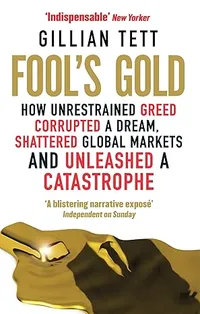
Author: Gillian Tett
Recommended by: Dan McEvoy, senior writer
My favourite book about money ever written. It was one of our recommendations two years ago, but if anyone hasn’t yet read it, now is the time.
The author, the FT’s brilliant Gillian Tett, studies the derivatives traders that caused the 2008 crisis with an anthropological, ethnographic perspective. This enables her to identify the biases and groupthink that ultimately led to the crash.
One of the most-repeated responses I hear when I ask fund managers whether we’re in an AI bubble is something to the effect of, “big tech CEOs wouldn’t be spending so much on AI infrastructure if they didn’t think it would generate a return”. Books like Fool’s Gold blow that kind of argument out of the water: the behaviour that leads to a bubble always feels rational to the people doing it.
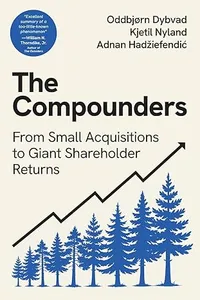
Book: The Compounders: From Small Acquisitions to Giant Shareholder Returns
Authors: Oddbjorn Dybvad, Kjetil Nyland and Adnan Hadziefendic
Recommended by: Matthew Partridge, shares editor
Conglomerates have a bad reputation for being a monument to management vanity and empire-building, with studies suggesting that they generally underperform more streamlined firms. However, Warren Buffett’s Berkshire Hathaway, has shown that they can work when used as holding companies. One book that might be able to help you spot the next Berkshire is The Compounders From Small Acquisitions to Giant Shareholder Returns by Oddbjorn Dybvad, Kjetil Nyland and Adnan Hadziefendic. This book looks at nine other companies that have successfully followed a Buffett-style strategy, producing high returns for their shareholders.
Each of the firms profiled has taken a slightly different path. However, the authors do a great job of pointing out the things that they have in common. These include: a decentralised corporate structure, iron discipline when adding to their portfolio and a ruthlessness about ensuring that the cash flows generated by the various parts of their empires were reinvested in the most efficient way possible. While there is no guarantee that their track record will continue, the book provides some important lessons that will maximise your chances of spotting the next Berkshire Hathaway, rather than the next THG.
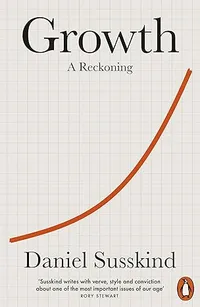
Book: Growth: A reckoning
Author: Daniel Susskind
Recommended by: Daniel Hilton, writer
For an idea that the government speaks about ad nauseam, it is surprising how little people know about the nature of economic growth. Thankfully, this marvellous little book can mend that.
Starting at its inception, Susskind charts the history of growth and how humans have attempted to measure it, explaining how the nebulous concept was interpreted, misinterpreted, formalised, and applied.
The book is short and sweet – it can be read in an evening or two – but will leave you with a new appreciation for how novel the concept of growth truly is, and leads you to question whether it is fit for purpose in the modern world.
Get the latest financial news, insights and expert analysis from our award-winning MoneyWeek team, to help you understand what really matters when it comes to your finances.

Oojal has a background in consumer journalism and is interested in helping people make the most of their money.
Oojal has an MA in international journalism from Cardiff University, and before joining MoneyWeek, she worked for Look After My Bills, a personal finance website, where she covered guides on household bills and money-saving deals.
Her bylines can be found on Newsquest, Voice.Cymru, DIVA and Sony Music, and she has explored subjects ranging from politics and LGBTQIA+ issues to food and entertainment.
Outside of work, Oojal enjoys travelling, going to the movies and learning Spanish with a little green owl.
-
Polar Capital: a cheap, leveraged play on technologyPolar Capital has carved out a niche in fund management and is reaping the benefits
-
Vaccines inject billions into Big Pharma – how to profitThe vaccines subsector received a big fillip from Covid, but its potential extends far beyond combating pandemics. Here's what it means for investors