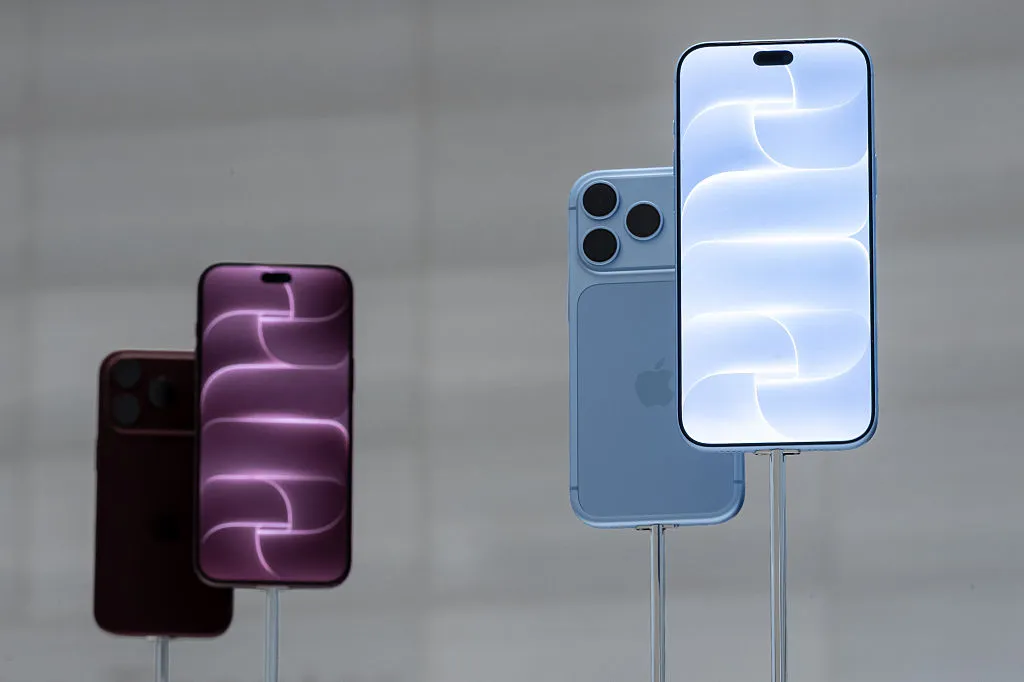
Who says Apple doesn't innovate any more? After the iPhone and iPad, we now have something entirely new: iFlation. When the technology giant launched its latest phone last week, most of the attention focused on the way it folded in half. But there was something else eye-catching about it as well. It costs almost $2,000. A top-of-the-range version will retail at more than $3,000.
That's a lot for a phone and a big increase on earlier versions. When the first iPhone was launched back in 2007, it cost $499. Adjusted for inflation that is about $800 in today's money. So even in real terms, a flashy new Apple device has almost doubled in price over the last two decades. The ability to keep pushing prices higher may help explain why Apple is one of the biggest and most profitable companies in the world.
It is far from alone as there is a broader trend at work here. Lots of high-status, luxury goods keep on getting more and more expensive. Take tickets for the Glastonbury Festival. We learned last week that next year's event would cost £408. That compares with £87 in 2000 or £170 in today's money. Likewise, Chanel's signature handbag has risen fivefold in price over the past two decades. A Rolex Submariner has more than doubled in price in real terms.
Start your trial of MoneyWeek today
Get unparalleled financial insight, analysis and expert opinion you can profit from.
Start your trial
Sign up for MoneyWeek’s free twice-daily newsletter.
Join more than 165,000 subscribers and keep yourself informed with latest financial news, insights and expert analysis to help you understand what really matters when it comes to your finances.
Join more than 165,000 subscribers and keep yourself informed with latest financial news, insights and expert analysis to help you understand what really matters when it comes to your finances.
These are just samples of a select group of products that don't simply perform a function – such as telling the time or making a phone call – but also signal your status, make you feel good about yourself, and impress your friends and neighbours. There are plenty of cheaper phones on the market that perform perfectly well. Some of them even fold in half. But they don't have the cachet of an Apple. Likewise, you can pick up a perfectly reliable watch in any department store, or even just use your phone, and it will tell you the time. But it doesn't tell the world how successful you are in the same way as a Rolex. The trouble with such high-status goods is that they are getting more and more expensive.
Why? To start with, companies have to keep pushing up the prices of such goods to maintain their exclusivity. By definition, a status good only maintains its position by having some degree of exclusivity. If everyone has one, it is not so classy any more. Price rises are one way to make sure its status is preserved.
Next, although we might not especially notice it in low-growth Europe, the world is getting richer. The number of millionaires in the world has roughly doubled from about 30 million a decade ago to roughly 60 million now, according to the UBS Wealth Report. There are a lot more people with plenty of money to spend, but often only a fixed number of things for them to spend it on. The result is that prices keep going up to match a limited supply with a soaring level of demand. As Asia and South America carry on growing a lot faster than the rest of the developed world, that is only going to get worse. On current trends, the iPhone 20 will cost $5,000 or more by the end of the decade.
Apple will only have themselves to blame
The problem, however, is that the economy is already struggling, with most people finding their living standards squeezed. If high-status goods become less and less affordable, it makes that situation feel worse. Even people who, by any reasonable measure, are making enough money to count themselves part of the affluent middle class may suddenly find they can't afford an Apple phone or a high-class watch. For anyone on a lower income, it becomes impossible to get to Glastonbury.
The divide between a tiny minority that can still afford a few luxury goods and everyone else will just get wider and wider. The result? The latter will feel more and more alienated from a free-market economy that no longer seems to deliver.
For corporations, raising prices is great for the bottom line, if you can get away with it. But if it means you undermine support for free-market capitalism, perhaps that is not such a great trade. At a certain point, iFlation will create a backlash, with the calls for wealth taxes and caps on corporate profits becoming louder all the time. The likes of Apple will only have themselves to blame for pushing prices up too aggressively.
This article was first published in MoneyWeek's magazine. Enjoy exclusive early access to news, opinion and analysis from our team of financial experts with a MoneyWeek subscription.