The banks have brought it on themselves
Britain's banks and big firms could have put an end to the culture of obscene salaries and bonuses the easy way. But instead, they chose the hard way.

You are now subscribed
Your newsletter sign-up was successful
Want to add more newsletters?

Twice daily
MoneyWeek
Get the latest financial news, insights and expert analysis from our award-winning MoneyWeek team, to help you understand what really matters when it comes to your finances.

Four times a week
Look After My Bills
Sign up to our free money-saving newsletter, filled with the latest news and expert advice to help you find the best tips and deals for managing your bills. Start saving today!
I wrote earlier this week about the effect that the distribution of wealth might have on prosperity. The general argument is that there is a limited number of innovators in each population. There is also a limited amount of capital.
The key to economic success, then, is to have an environment in which enough innovators can get enough capital to create growth. Clearly, the more widely wealth is spread around, the more likely this is to happen.
MoneyWeek
Subscribe to MoneyWeek today and get your first six magazine issues absolutely FREE

Sign up to Money Morning
Don't miss the latest investment and personal finances news, market analysis, plus money-saving tips with our free twice-daily newsletter
Don't miss the latest investment and personal finances news, market analysis, plus money-saving tips with our free twice-daily newsletter
At the same time, the share of national income going to the top 1% of the population has risen to 15.5%. That's more than double the number in 1979 and brings us roughly back to where we were in the 1930s.
A flick through the papers tells you similar things at an anecdotal level. This week's Observer came with a double-page story on how the "new global elites" are buying up Europe wealthy Russians are apparently popping up in £40m estates all over Tuscany and Sardinia.
You might say that this doesn't much matter. After all, we all have more access to capital than we did in 12th century Italy, for example (thanks to everything from banks to equity markets to Zopa). So, if we have a fabulous idea, we are bound to be able to get the money to develop it from somewhere.
You may be right. We'll have to wait and see. But whatever the reason, history does consistently show that relatively equal societies with robust liberal institutions grow faster than the opposite (please no comments about communism it isn't really the same thing and you know that).
It is also the case that the residents of relatively democratic states don't like extreme inequality. And that they particularly don't like it in recessions.
One of the common reactions to my initial column on this was to berate me for suggesting that there should be any more government intervention into the distribution of wealth. But I didn't actually suggest anything of the sort.
I've spoken about this problem many times over the last few years. And on each occasion I have pointed out that governments don't usually get smaller in times of crisis. They get bigger moving into all sorts of areas that were once considered none of their business.
But early on the in the financial crisis, at least big corporates and banks had a something of a choice. They could either be seen to be doing something about excessive pay bonuses, and so on themselves, or they could sit back and wait for popular protests to push governments into doing something about it.
Inexplicably, they appear to have opted for the latter. Hence the bonus restrictions out of Europe, the endless talk of wealth taxes and the like.
I would have liked the solution to rising inequality to be less government (so more competition and fewer oligopolistic industries) rather than more government, but that isn't the way it looks like it's going to go. And those running our big firms and our banks? They have only themselves to blame.

-
 Average UK house price reaches £300,000 for first time, Halifax says
While the average house price has topped £300k, regional disparities still remain, Halifax finds.
-
 Barings Emerging Europe trust bounces back from Russia woes
Barings Emerging Europe trust has added the Middle East and Africa to its mandate, delivering a strong recovery, says Max King


-
 Beating inflation takes more luck than skill – but are we about to get lucky?
Opinion The US Federal Reserve managed to beat inflation in the 1980s. But much of that was down to pure luck. Thankfully, says Merryn Somerset Webb, the Bank of England may be about to get lucky.
-
 Rishi Sunak can’t fix all our problems – so why try?
Opinion Rishi Sunak’s Spring Statement is an attempt to plaster over problems the chancellor can’t fix. So should he even bother trying, asks Merryn Somerset Webb?
-
 Young people are becoming a scarce resource – we should value them more highly
Opinion In the last two years adults have been bizarrely unkind to children and young people. That doesn’t bode well for the future, says Merryn Somerset Webb.
-
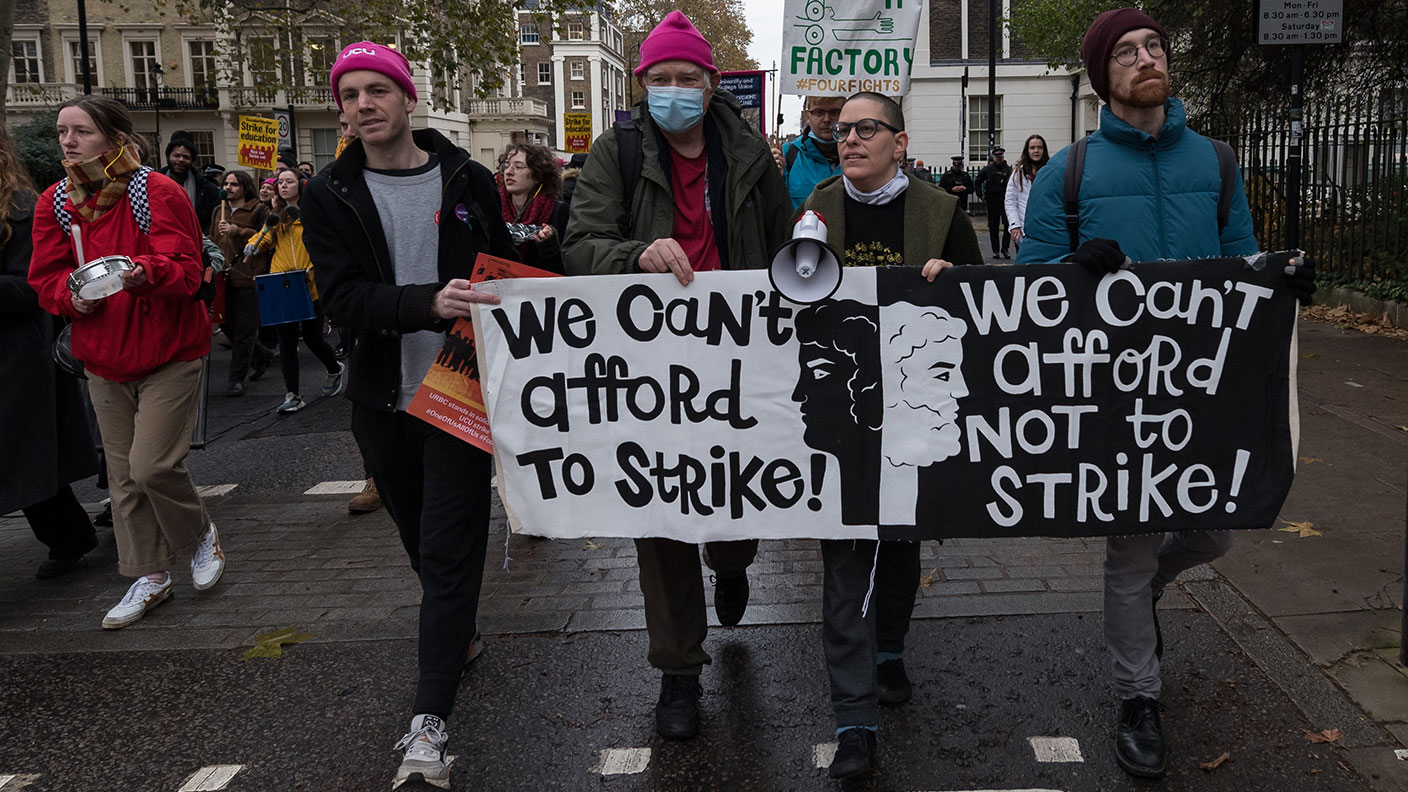 Ask for a pay rise – everyone else is
Opinion As inflation bites and the labour market remains tight, many of the nation's employees are asking for a pay rise. Merryn Somerset Webb explains why you should do that too.
-
 Why central banks should stick to controlling inflation
Opinion The world’s central bankers are stepping out of their traditional roles and becoming much more political. That’s a mistake, says Merryn Somerset Webb.
-
 How St Ives became St Tropez as the recovery drives prices sky high
Opinion Merryn Somerset Webb finds herself at the epicentre of Britain’s V-shaped recovery as pent-up demand flows straight into Cornwall’s restaurants and beaches.
-
 The real problem of Universal Basic Income (UBI)
Merryn's Blog April employment numbers showed 75 per cent fewer people in the US returned to employment compared to expectations. Merryn Somerset-Webb explains how excessive government support is causing a shortage of labour.
-
 Why an ageing population is not necessarily the disaster many people think it is
Opinion We’ve got used to the idea that an ageing population is a bad thing. But that’s not necessarily true, says Merryn Somerset Webb.


