Join more than 165,000 subscribers and keep yourself informed with the latest financial news, insights and expert analysis to help you understand what really matters when it comes to your finances.
You are now subscribed
Your newsletter sign-up was successful
Want to add more newsletters?
An account already exists for this email address, please log in.
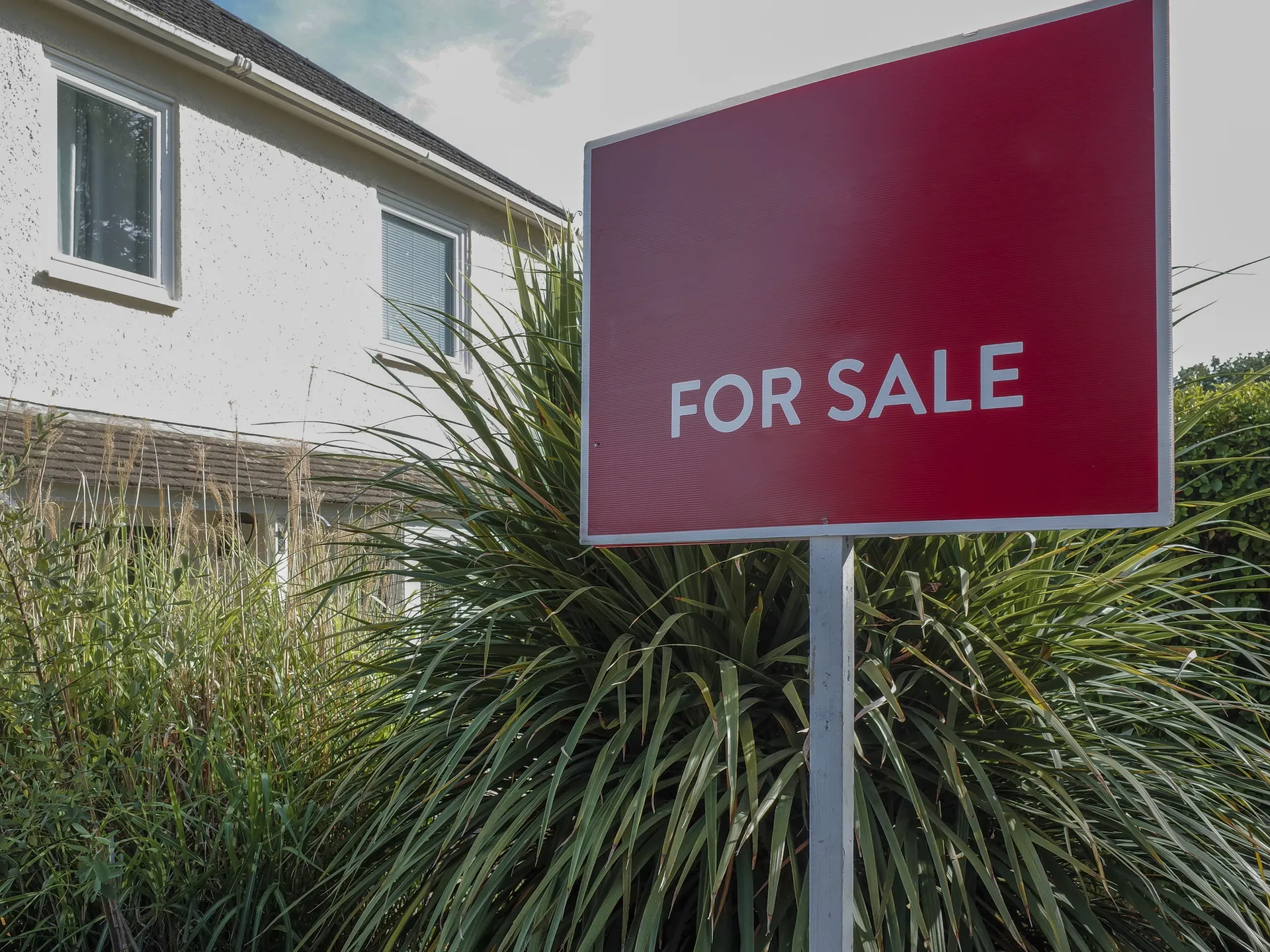
UK house prices forecast to fall by 1.5% in 2027 – how could your region be affected?
UK estate agent Savills has revised down previous forecasts which said property values would rise by 2.5% next year as protracted conflict in the Middle East keeps mortgage rates elevated.
UK house prices could drop by 1.5% in 2027 as higher mortgage rates squeeze buyer affordability, according to global real estate adviser Savills.
Its latest house price forecast predicts the average property value will fall by £5,500 due to stubborn interest rates.
In its June forecast, Savills had said house prices would increase by 2.5% next year, but rising inflation brought on by protracted conflict in the Middle East has led to a more pessimistic outlook.
Start your trial of MoneyWeek today
Get unparalleled financial insight, analysis and expert opinion you can profit from.
Sign up for MoneyWeek’s free twice-daily newsletter.
Join more than 165,000 subscribers and keep yourself informed with latest financial news, insights and expert analysis to help you understand what really matters when it comes to your finances.
Join more than 165,000 subscribers and keep yourself informed with latest financial news, insights and expert analysis to help you understand what really matters when it comes to your finances.
Emily Williams, director of residential research at Savills, said: “The drawn-out conflict in the Middle East has pushed back the prospect of meaningful mortgage rate relief, which will weigh on buyer sentiment and affordability.
“We expect this will suppress activity and put pressure on prices next year.”
Savills predicts house price growth will improve after 2027, with the average UK house price going up by 3.5% in 2028, and 5% in both 2029 and 2030.
Over the five years from 2027, the average UK home is expected to increase in value by £56,500.
Williams added: “Most homeowners have already absorbed higher borrowing costs since late 2022, with relatively few still needing to refinance directly from rates below 2%, and the labour market remains resilient.”
Combined, Williams said these factors should keep forced sales, when a lender possesses the home of an owner who can’t keep up with mortgage repayments, low, and also limit further downward pressure on prices.
Swipe to scroll horizontally
House price forecasts
Row 0 - Cell 0
2026
2027
2028
2029
2030
2031
Five years to 2031
UK house price growth (%)
0.00%
-1.50%
3.50%
5.00%
5.00%
3.00%
15.80%
UK house price growth (£)
-
-£5,500
£12,500
£18,500
£19,000
£12,000
£56,500
CPI inflation
3.70%
2.40%
1.40%
1.90%
1.90%
1.90%
9.80%
Bank of England base rate (at year end)
4.00%
4.25%
3.25%
3.00%
3.00%
3.00%
-
Assumed average mortgage rate (at year end)
5.32%
5.09%
4.23%
4.00%
4.00%
4.00%
-
Real GDP growth
1.30%
0.70%
1.80%
1.80%
1.70%
1.60%
7.80%
Nominal income growth
2.70%
2.20%
2.80%
2.90%
2.90%
2.80%
14.40%
Source: Savills, using Oxford Economics and Bank of England data
North versus south divide expected to extend into 2027
While the average UK house price is expected to fall in 2027, property prices in some areas are expected to buck the overall trend and increase, according to Savills.
The firm said house prices in Yorkshire and the Humber will go up by 0.5%, while rises of 1% are expected in the North East and North West England regions next year.
Wales and Scotland are also expected to record gains of 0.5% and 1% respectively.
House prices are typically lower in these regions and have more room to grow, as well as offering strong employment prospects.
Some parts of the UK, such as London and the South East, could see house prices fall by as much as 3.5%, the forecast suggests.
Similarly, property prices in the South West could drop by 3% and 2% in the East Midlands.
Dan Hill, residential research associate at Savills, said: “Markets combining relative affordability with strong employment and investment prospects are expected to outperform, including Manchester, Leeds, Liverpool and Bristol, alongside well-connected commuter locations offering better value than their surrounding regions.
“Property type will also remain an important driver of performance. Demand for larger family homes continues to be supported by flexible working patterns and changing buyer demographics, while flats face headwinds from affordability constraints, building safety concerns and greater supply. As a result, we expect houses to continue outperforming flats.”
Swipe to scroll horizontally
House price forecast for 2027 to 2031 by region
Region
2027
2028
2029
2030
2031
Five years to 2031
UK
-1.50%
3.50%
5.00%
5.00%
3.00%
15.80%
London
-3.50%
2.00%
3.50%
3.50%
2.50%
8.10%
South East
-3.50%
2.00%
4.00%
4.00%
2.50%
9.10%
East of England
-3.50%
2.00%
4.50%
4.50%
3.00%
10.70%
South West
-3.00%
3.00%
5.00%
5.00%
3.00%
13.50%
East Midlands
-2.00%
4.00%
5.00%
5.00%
3.00%
15.70%
West Midlands
-1.50%
4.00%
5.00%
5.00%
3.00%
16.30%
Yorkshire and The Humber
0.50%
4.50%
5.50%
5.50%
3.50%
21.00%
Wales
0.50%
4.50%
5.50%
5.50%
3.50%
21.00%
Scotland
1.00%
4.50%
5.50%
5.50%
3.50%
21.60%
North East
1.00%
5.00%
5.50%
5.50%
3.50%
22.20%
North West
1.00%
5.00%
6.00%
6.00%
3.50%
23.30%
Source: Savills
What should buyers and sellers do?
While the forecasts for 2027 may make for grim reading for homeowners in parts of the UK, they paint a picture of relative “equilibrium”, according to Stuart Bailey, co-head of the London Private Office at estate agent Knight Frank.
He said buyers and sellers should continue doing what they were planning on doing.
Sellers with premium second properties in places like London wondering what to do could sell now and free up some capital. Or, they could wait out any house price falls.
“If you bought [a home] in the last 10 years and haven't made any money, you might hold it,” Bailey said.
“But you might have to hold it another 10 years to get real material growth.”
In any case, sellers need to set the right asking price given the buyer’s market conditions, Bailey said.
Sign up for MoneyWeek's newsletters
Join more than 165,000 subscribers and keep yourself informed with the latest financial news, insights and expert analysis to help you understand what really matters when it comes to your finances.