You are now subscribed
Your newsletter sign-up was successful
Want to add more newsletters?

Twice daily
MoneyWeek
Get the latest financial news, insights and expert analysis from our award-winning MoneyWeek team, to help you understand what really matters when it comes to your finances.

Four times a week
Look After My Bills
Sign up to our free money-saving newsletter, filled with the latest news and expert advice to help you find the best tips and deals for managing your bills. Start saving today!

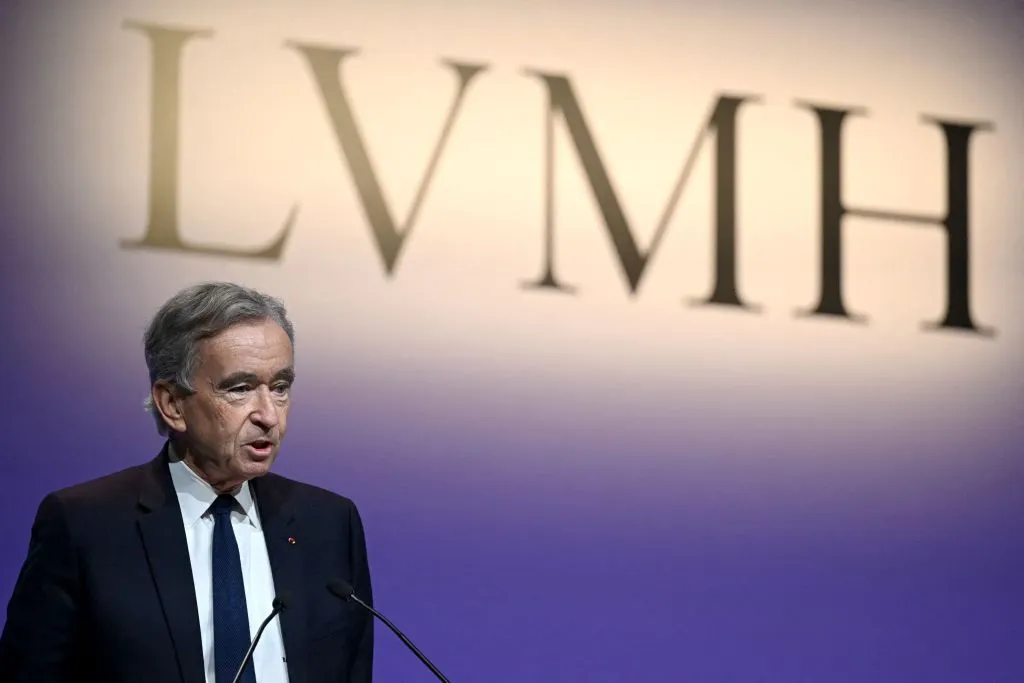
"They say in Paris that all roads lead to Arnault," says the FT. The LVMH chief, whose ruthless approach to acquisitions has earned him the nickname "the wolf in cashmere", is France's richest man and, depending who you ask, either the second or third richest in the world, with a fortune put at $100.4bn by Bloomberg. "His empire permeates Paris."
Bernard Arnault's luxury group, built over four decades, now encompasses some 70 brands many of them vintage French names. Meanwhile, he has steadily acquired a "Medici-like influence" on the city's culture. He is a personal friend of presidents Sarkozy and Macron, and was on hand with a €200m donation when a fire devastated Notre-Dame this year. When he visits China, he is given "a head of state's welcome".
How he built his empire
"I always liked being number one," Arnault, 70, says simply. "I did not succeed at the piano. I did not succeed at tennis" So he focused instead on creating the number one group in the luxury sector, which he is credited with inventing. To that end, Arnault is now attempting to grab the US jeweller Tiffany & Co for $14.5bn in a deal that would double the size of LVMH's watches and jewellery business, notes The Daily Telegraph. Opinion is divided on the wisdom of the move. But according to one banker: "It's a huge, transformative transaction, even for LVMH. This deal would put his empire squarely out of the reach of the rest of the luxury groups."
MoneyWeek
Subscribe to MoneyWeek today and get your first six magazine issues absolutely FREE

Sign up to Money Morning
Don't miss the latest investment and personal finances news, market analysis, plus money-saving tips with our free twice-daily newsletter
Don't miss the latest investment and personal finances news, market analysis, plus money-saving tips with our free twice-daily newsletter
Associates describe him as "driven only in one direction forward", says The Observer. Born in Roubaix, a rust-belt town in northern France, the son of an industrialist, he was educated at the elite cole Polytechnique and worked for his father's construction business before convincing him to concentrate on real estate. Around that time, Arnault visited the US and asked a New York taxi driver what he knew of France. "He could not name the president but he knew Dior," he recounts. The story opened his eyes to the power of luxury brands and "stuck in his mind", says the FT. Years later, in 1984, he took control of a bankrupt textile company because "it owned a jewel he wanted". He ended up acquiring Christian Dior "for a symbolic one franc".
The next big leap, in 1989, was the hostile takeover of Louis Vuitton following a cunning manoeuvre that saw the president ousted from his family company. Arnault went on to "deploy the same playbook of ousting founders, dividing families, or driving a wedge between business partners" in a host of further acquisitions.
A business visionary
Arnault's "aggressive American-style approach to business" initially alarmed the French establishment. But elsewhere he gained plaudits as a visionary, says The Observer. His great insight, according to former Goldman boss Lloyd Blankfein, was realising the incipient "global demand for luxury products" and building a vehicle from a motley collection of family-run businesses to tap it. The key to LVMH's success was "first mover" advantage, notably in China, where he opened the first Louis Vuitton store in 1992 in a building with no hot water.
Although his two older children are "being groomed to take over", age does not appear to have dimmed Arnault's hunger for deals, says the Financial Times. "I hate the past," he says. "What interests me is the future" adding, without any apparent irony: "We're still small. We're just getting started."
-
 ISA fund and trust picks for every type of investor – which could work for you?
Whether you’re an ISA investor seeking reliable returns, looking to add a bit more risk to your portfolio or are new to investing, MoneyWeek asked the experts for funds and investment trusts you could consider in 2026
-
 The most popular fund sectors of 2025 as investor outflows continue
It was another difficult year for fund inflows but there are signs that investors are returning to the financial markets

