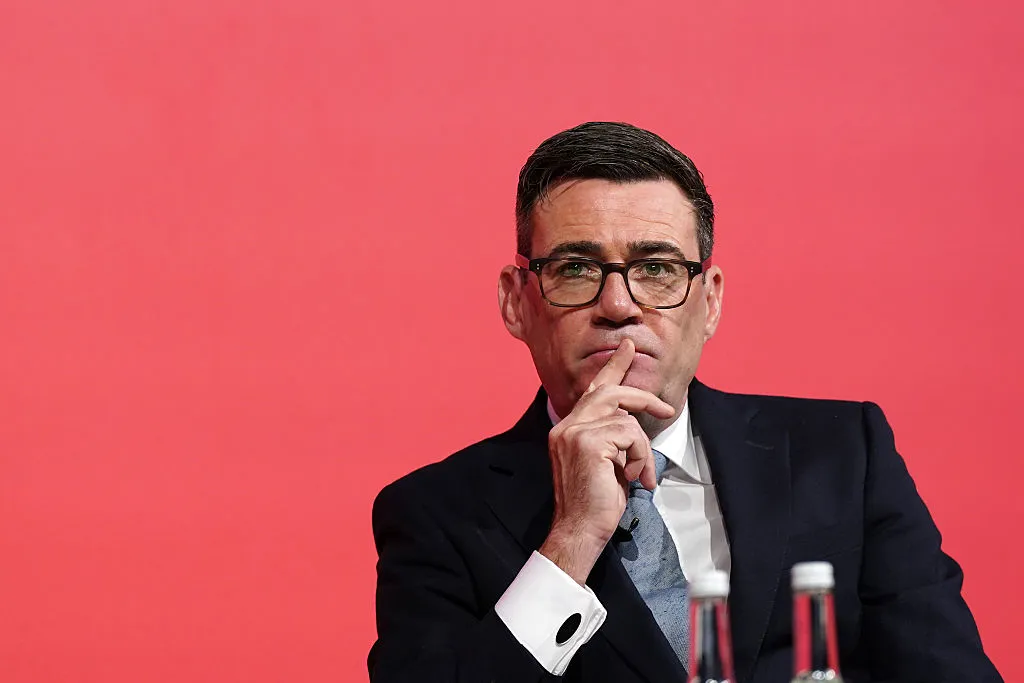
The state pension triple lock is set to be replaced with a double lock system in April 2030 to help fund a new free social care service, prime minister Andy Burnham has announced.
Burnham affirmed that he will stick to the 2024 Labour manifesto commitment to keep the triple lock in place for the rest of this parliament, but said he will “adjust” the promise if Labour win a second term in power.
“I won't pretend some of this won't be difficult. I accept I may pay a political price, but someone has to go through the pain barrier and rip the plaster off,” he said during his speech at the Labour Party conference.
Start your trial of MoneyWeek today
Get unparalleled financial insight, analysis and expert opinion you can profit from.
Start your trial
Sign up for MoneyWeek’s free twice-daily newsletter.
Join more than 165,000 subscribers and keep yourself informed with latest financial news, insights and expert analysis to help you understand what really matters when it comes to your finances.
Join more than 165,000 subscribers and keep yourself informed with latest financial news, insights and expert analysis to help you understand what really matters when it comes to your finances.
Under the current triple lock system, the state pension increases every year by whatever is highest out of inflation, average earnings, or a flat 2.5%.
Latest Videos FromMoneyWeek
From April 2030, the first tax year after the next general election, Burnham said the state pension “will continue to rise every year, at least by prices, or 2.5%”.
Assuming Labour won the election so they could change the policy, this would effectively turn the triple lock into a ‘double lock’, protecting the state pension against inflation but ending the direct relationship between the state pension and annual average earnings.
Burnham said the state pension will also “hold its value relative to earnings over time, so that pensioners will always share in the rising prosperity of the nation”.
Kate Smith, head of pensions at Aegon, speculated that this link to earnings over time “could possibly involve an element of smoothing of earnings increases over a few years relative to the increases in prices and the 2.5% increase,” but said that it is currently unclear how this will work in practice.
Smith welcomed the change to the triple lock, saying that it is time for the country to have “serious conversation about how the state pension can remain affordable, sustainable, and fair across generations.”
She added: “It is important to remember that nothing changes for pensioners now. The government has reiterated that the triple lock remains in place until 2029. For millions of people, the state pension is the bedrock of retirement income and will continue to be so.”
Helen Morrissey, head of retirement analysis at Hargreaves Lansdown, said: “Now that the move from the triple lock to the double lock has been announced, the government must also provide savers with a stable tax environment and publish a five-year tax roadmap that sets out its plans on the important issues that influence how people plan for retirement such as tax-free cash and pensions tax relief."
Savings from triple lock removal will fund new social care system
Burnham said that scrapping the triple lock in its current form would “generate significant savings” that will be used to create a new ‘national care service’ if voters grant Labour a second term in office.
The proposed service would provide social care for the elderly and operate under NHS principles of being universal and free at the point of use, and would be at the heart of Labour’s next general election manifesto.
Burnham called the plan “a landmark policy as significant as the creation of the NHS itself, and utterly essential to securing its future. We will start laying the ground now for the National Care Service and introduce it in the next Parliament.”
He added: “So this is the deal: a state pension that rises every year, no care charges, and a high-quality national care service to give peace of mind in later life. Conference, I am going to go out and argue for a good deal for our pensioners and for older people in the 21st century.”
Residential adult social care costs an average of £54,000 a year
Implementing a free and universal social care system could save families hundreds of thousands of pounds on average on residential care.
Residential adult social care costs more than £54,000 a year on average in England, while nursing care costs over £71,000, according to a report by Laing Buisson in 2025.
Meanwhile, new data from investment platform AJ Bell suggests caring for a loved one yourself over 20 years can cost £1 million in lost salary and pension wealth.
Sarah Coles, head of personal finance at AJ Bell, said: “When we think about the cost of care, we tend to consider the expense of formal care, which is eye-watering. However, in 2023/24, an estimated 5.4 million people were informal carers, and for them, there’s every chance their responsibilities are costing them dear too.”