Join more than 165,000 subscribers and keep yourself informed with the latest financial news, insights and expert analysis to help you understand what really matters when it comes to your finances.
You are now subscribed
Your newsletter sign-up was successful
Want to add more newsletters?
An account already exists for this email address, please log in.
Trouble in the House of Liechtenstein – who is to blame?
The de facto head of Liechtenstein's ruling family is facing a royal rebellion over over reforms that threaten to erode their wealth and power
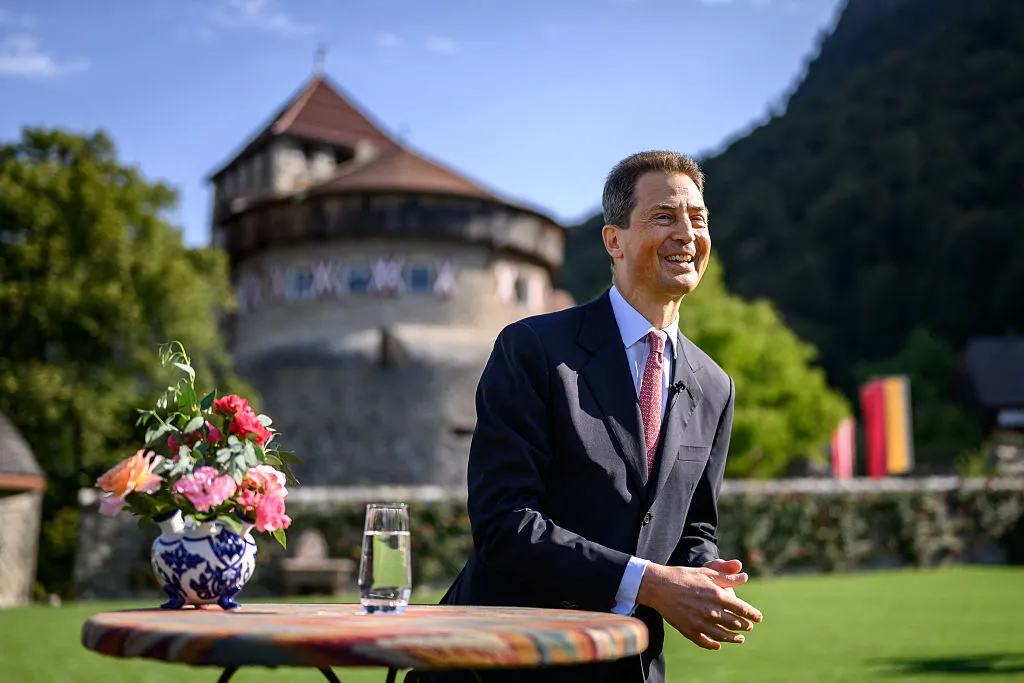
The Principality of Liechtenstein is currently mired in a dispute that is “consuming Europe’s wealthiest monarchy” – with rebel royals threatening to sue the prince regent, Prince Alois, says the Financial Times. At issue are his progressive plans to reform their “dynastic status – and the allowances that come with it”.
Extended family members claim the 58-year-old prince has used long overdue reforms – including opening up the succession to women and giving them voting rights in family affairs – as cover for a series of less attractive measures that will “tighten his grip” over their own lives and weaken their power.
The mooted changes (reportedly opposed by a third of the 50 princes eligible to vote) give Alois more authority over “their titles, coats of arms and dynastic membership” of the “princely house”. Also at stake is the multi-billion dollar family fortune, much of it centred on LGT – the private bank owned by the princely house and overseen by Alois’s brother, Prince Max. In 2025 the bank, worth more than $400 billion, paid out a dividend of about $878 million. No one wants to be cut out of their share.
Start your trial of MoneyWeek today
Get unparalleled financial insight, analysis and expert opinion you can profit from.
Sign up for MoneyWeek’s free twice-daily newsletter.
Join more than 165,000 subscribers and keep yourself informed with latest financial news, insights and expert analysis to help you understand what really matters when it comes to your finances.
Join more than 165,000 subscribers and keep yourself informed with latest financial news, insights and expert analysis to help you understand what really matters when it comes to your finances.
The situation is complicated by Liechtenstein’s governance structure. The “house law” governing the ruling family – which dates from 1136 – sits outside the microstate’s constitution. Yet the ruler has “power to veto laws, dismiss governments and dissolve parliament”. Two decades ago, the Council of Europe’s body of legal experts called this arrangement “astonishing”. It is currently still in force.
Who are the House of Liechtenstein?
The combination of “royal status and business savvy” has long set the House of Liechtenstein apart from every other monarchy in Europe, says Salon Privé. The dynasty has bred a long line of bankers, not least Prince Max, 57 – the second son of the official reigning monarch Hans-Adam II and a former alumnus of JPMorgan Chase – who has been running LGT since 2006. Under his watch, it has expanded “from a regional European bank to a global operation” with 6,000 employees across 30 countries and now seems well positioned “for another century of success”.
More recently, a younger family member, Gisela Bergmann, 36, has been making waves, says The Times. In August, the Pope appointed the princess – who previously ran the family’s wealth management business – to manage the Vatican’s finances. She has the perfect credentials to run a wealthy microstate, once observing: “We look at wealth and family from a holistic perspective, always thinking in terms of generations” – a message likely to go down well at the Vatican.
Still, the most significant, and increasingly controversial, member of the tribe is Prince Alois, who has been acting as regent to his father since 2004. Born in 1968, he attended Sandhurst, becoming a second lieutenant in the Coldstream Guards, before studying law at the University of Salzburg. Alois worked at a firm of London chartered accountants before returning to the family ancestral home, Valduz, in 1996.
For years, the prince had the perfect public profile. As the Australian Women’s Weekly approvingly noted, he was known “for his more contemporary outlook, balancing tradition with global diplomacy”. But recent opposition stretches beyond his family, says the Swiss news site Blue News. “Liechtenstein is in an uproar” over everything from the prince’s stance over abortion to his far-reaching constitutional powers. A recent hacker attack – which has “shaken confidence” in Liechtenstein’s financial centre – hasn’t helped.
For decades Liechtenstein was regarded as “the epitome of stability” and “synonymous with prosperity”. It’s going through an unusually turbulent period.
This article was first published in MoneyWeek's magazine. Enjoy exclusive early access to news, opinion and analysis from our team of financial experts with a MoneyWeek subscription.
Sign up for MoneyWeek's newsletters
Join more than 165,000 subscribers and keep yourself informed with the latest financial news, insights and expert analysis to help you understand what really matters when it comes to your finances.
Jane writes profiles for MoneyWeek and is city editor of The Week. A former British Society of Magazine Editors (BSME) editor of the year, she cut her teeth in journalism editing The Daily Telegraph’s Letters page and writing gossip for the London Evening Standard – while contributing to a kaleidoscopic range of business magazines including Personnel Today, Edge, Microscope, Computing, PC Business World, and Business & Finance.