Join more than 165,000 subscribers and keep yourself informed with the latest financial news, insights and expert analysis to help you understand what really matters when it comes to your finances.
You are now subscribed
Your newsletter sign-up was successful
Want to add more newsletters?
An account already exists for this email address, please log in.
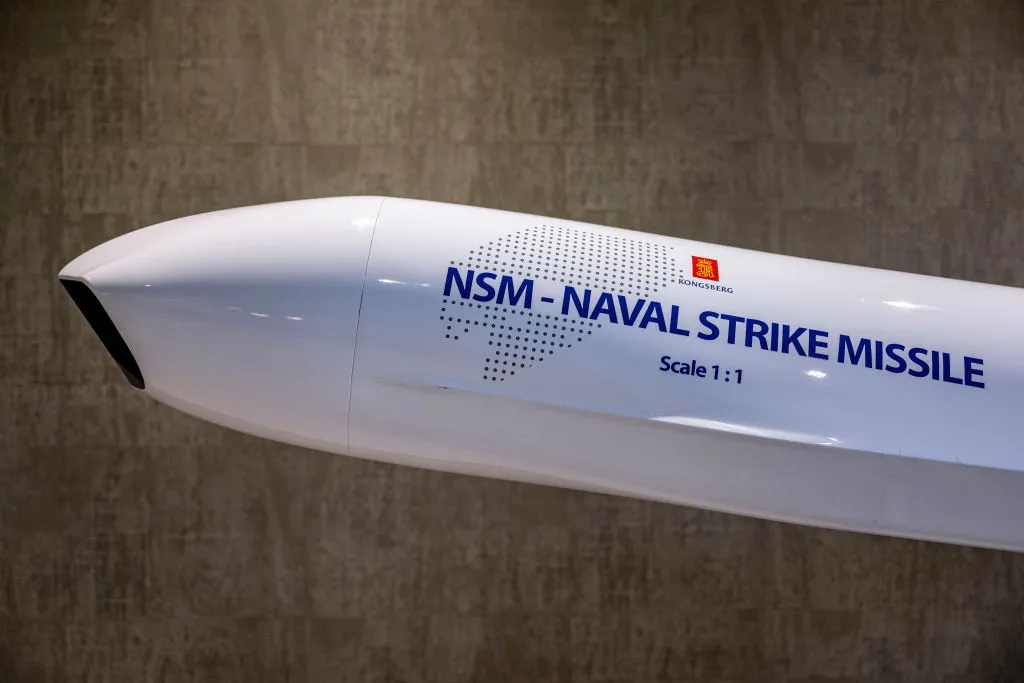
Kongsberg – Norwegian firm will benefit from rising defence spending
Norwegian arms maker Kongsberg is a key beneficiary of rising government defence spending
Norwegian arms manufacturer Kongsberg Gruppen(Oslo: KOG) is likely to benefit from a big increase in defence spending. The Nato summit in Ankara in July 2026 reported that European allies and Canada had invested more than $139 billion in core defence requirements over the previous year, together with $50 billion of new procurements and a commitment to expand manufacturing capacity. In addition, the allies pledged $70 billion of military equipment, training and support to Ukraine for 2026, with at least that amount again for 2027.
At the 2025 financial year-end, Kongsberg’s order backlog was NKr157 billion (£12.4 billion); the chief executive officer said that, in his ten years in the job, he had never seen such high demand.
Kongsberg 's focus on growth
In February 2026, Kongsberg announced that it had spun off its maritime division as a separate listed company (Kongsberg Maritime) to concentrate business on the three higher-growth divisions. Defence Systems is the largest division (47% of revenue) with Missiles & Aerostructures (30%) and Discovery (23%) together accounting for 53% of revenue.
Start your trial of MoneyWeek today
Get unparalleled financial insight, analysis and expert opinion you can profit from.
Sign up for MoneyWeek’s free twice-daily newsletter.
Join more than 165,000 subscribers and keep yourself informed with latest financial news, insights and expert analysis to help you understand what really matters when it comes to your finances.
Join more than 165,000 subscribers and keep yourself informed with latest financial news, insights and expert analysis to help you understand what really matters when it comes to your finances.
Then, in June 2026, Kongsberg announced it had completed the acquisition of Zone 5 Technologies, a Californian company that is the market leader in affordable, mass-producible munitions. These include long-range strike and interceptor missiles. Zone 5 will add to Kongsberg’s existing US business since Zone 5 has won US contract including one for the US Air Force’s AGM-188 FAMM (Family of Affordable Mass Missiles).
In September, Kongsberg also acquired Sonatech of California, an underwater acoustics specialist whose technology will be used in Kongsberg’s autonomous underwater vehicles. In July, Kongsberg won a $100 million contract from the US Air Force for stealth air-to-surface Joint Strike Missiles (JSMs), which can be carried internally in the F35-A fighter; deliveries are scheduled up to 2030. The JSM has also been selected by Australia, Canada, Germany, Japan and Norway.
Kongsberg’s results for the three months to the end of June 2026 were the first without the maritime division and showed revenues up 31% from the same period in 2025, rising to NKr10.4 billion. Earnings before interest and tax (Ebit) were up 48.9% to NKr1.67bn and the Ebit margin rose to 16.1%. The order intake for the second quarter rose by 164% of second-quarter revenue, taking the order backlog to NKr157 billion.
New growth drivers for Kongsberg
In the second quarter of the year the Defence Systems division saw strong demand for air defence and counterdrone systems. An agreement was reached with partner Raytheon to start deliveries of the NASAMS air defence system to Kuwait. The Missiles & Aerostructures division was awarded JSM missile contracts totalling NKr10.9 billion to Canada, Germany and the US. The Discovery division also won contracts, including one for the monitoring and protection of critical subsea infrastructure.
The growth drivers for Kongsberg are, firstly, the large and increasing order backlog, which is driving increased investment in new and expanded production facilities. Secondly, acquisitions, new product development and capacity expansion is supported by cash outflow of NKr3.7 billion in the second quarter.
The existing Norwegian missile plant is being supplemented by new factories in Australia and the US, with expanded production of subsea technology in Norway. The Australian and US missile facilities will be operational in late 2027, with full-rate production by 2028, so will contribute to the 2029 revenue target of NKr100 billion by 2029 – 2.3 times the projected revenue for 2026 – rising to NKr150 billion in 2033.
Kongsberg's earnings are on the rise
Kongsberg Gruppen has a market capitalisation of NKr275 billion at the recent share price of NKr312.7, with a one-year price target of NKr396.4. The forward dividend yield is 0.7%.
(Image credit: Future)
The balance sheet is strong with cash and equivalents of NKr4.9 billion at the end of the second quarter of this year, compared with loans and lease liabilities of NKr2.1 billion.
Analysts predict 2027 revenues of NKr64.2 billion, a 49% increase over 2026. Earnings per share are projected to rise to NKr11.2 in 2027, a 52% increase over 2026. The contributors to the projected revenue growth of more than three times by 2033 include the Zone 5 and Sonatech US acquisitions and new missile factories in Australia and the US.
There is also the NKr16b billion contract signed with Poland in January 2026 to provide counter-drone (C-UAS) batteries, forming a multi-layered anti-drone wall as part of Poland's East Shield initiative for protection against Russia. Further contracts for C-UAS could follow if other European nations follow this Polish initiative.
At the recent share price of NKr312.7, the price/earnings ratio for 2027 is 27.9. If Kongsberg hits its 2029 revenue target of NKr100 billion and earnings per share rise only proportionately to revenue, then the 2029 p/e would be 18.3.
Kongsberg is a growing defence company with a massive order backlog of 3.6 times annual revenue, substantial sales in the important US defence market, significant sales in Asia and is playing an important part in upgrading European defence capabilities to counter the threat of Russian aggression.
The company plans to more than treble turnover by 2033 and is investing in both acquisitions and new production facilities to achieve this. Directors have significant shareholdings. The chief executive officer holds 250,000 shares and two executive vice-presidents together hold 230,000 shares.
This article was first published in MoneyWeek's magazine. Enjoy exclusive early access to news, opinion and analysis from our team of financial experts with a MoneyWeek subscription.
Sign up for MoneyWeek's newsletters
Join more than 165,000 subscribers and keep yourself informed with the latest financial news, insights and expert analysis to help you understand what really matters when it comes to your finances.
Highly qualified (BSc PhD CPhys FInstP MIoD) expert in R&D management, business improvement and investment analysis, Dr Mike Tubbs worked for decades on the 'inside' of corporate giants such as Xerox, Battelle and Lucas. Working in the research and development departments, he learnt what became the key to his investing; knowledge which gave him a unique perspective on the stock markets.
Dr Tubbs went on to create the R&DScorecard which was presented annually to the Department of Trade & Industry and the European Commission. It was a guide for European businesses on how to improve prospects using correctly applied research and development.
He has been a contributor to MoneyWeek for many years, with a particular focus on R&D-driven growth companies.