Join more than 165,000 subscribers and keep yourself informed with the latest financial news, insights and expert analysis to help you understand what really matters when it comes to your finances.
You are now subscribed
Your newsletter sign-up was successful
Want to add more newsletters?
An account already exists for this email address, please log in.
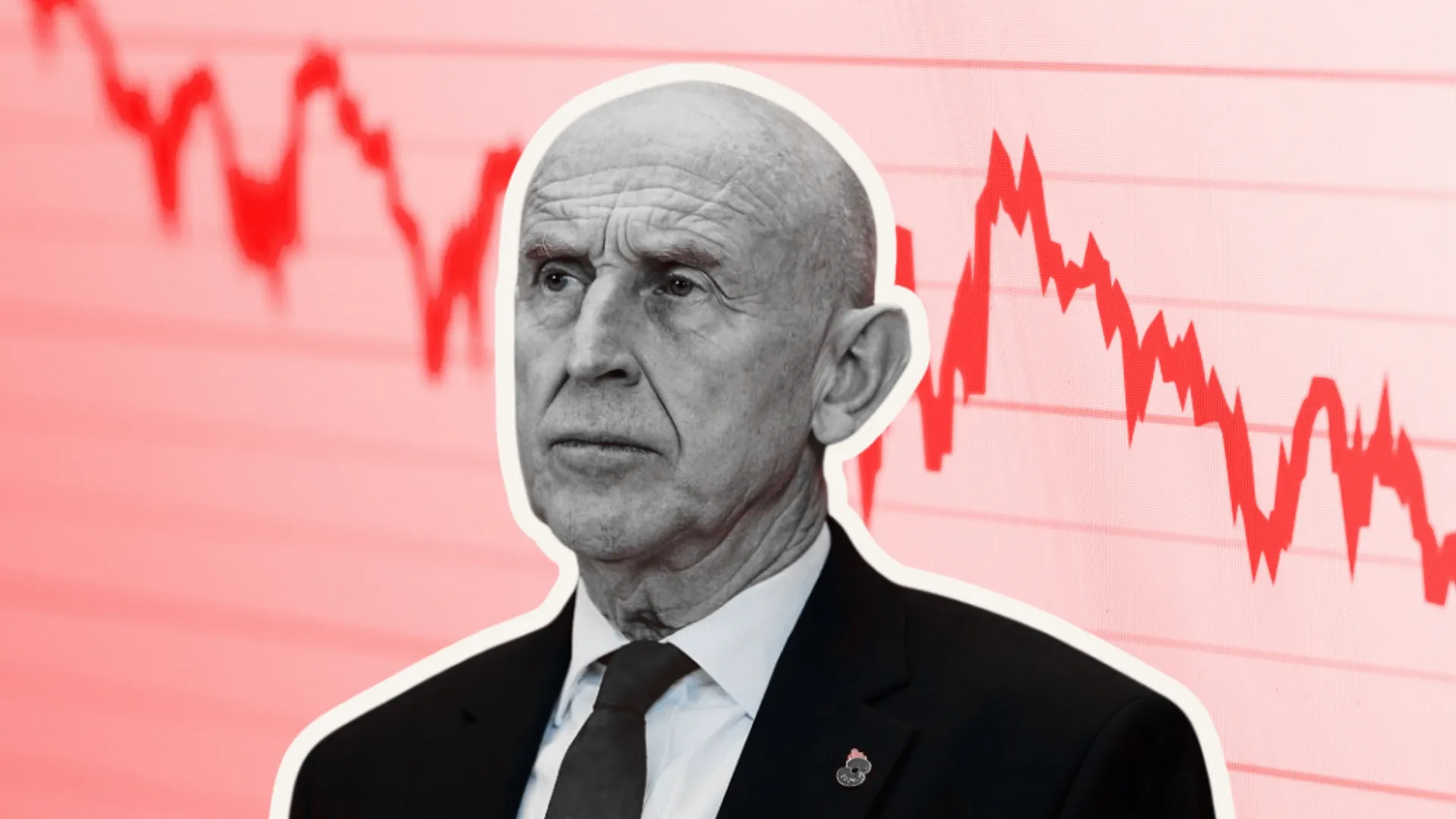
The consequences of John Healey's first Budget
John Healey's Budget will leave the UK with pedestrian growth, sticky inflation and in hock to the bond markets, says Max King
One of the most telling items in John Healey's first Budget as chancellor was the U-turn on the proposal in the last Budget to reduce the limit on cash individual savings accounts (ISAs) from £20,000 to £12,000. Commentators described this as a recognition of the importance of encouraging savings, but it was nothing of the sort. A few days earlier, Hargreaves Lansdown had announced the launch of a low-cost money-market fund with daily access and an expected yield of 3.95%.
This and similar money-market funds would have remained eligible for the full £20,000 in stocks and shares ISAs despite being virtually indistinguishable from cash. When Rachel Reeves, the previous chancellor, reduced the limit on cash ISAs, neither she, nor her team nor the Treasury had realised that money-market funds offered a giant loophole in her proposals.
Failure to recognise the consequences of budgetary measures is par for the course for chancellors and the Treasury and there were numerous examples of this in the Budget. The prime minister had announced that pensioners with no other income would be taxed on the excess of the state pension over the tax-free allowance without thinking of the complexities this would cause. The result is an administrative nightmare of enforcement and applying tapering relief to 210,000 pensioners with a little extra income.
Start your trial of MoneyWeek today
Get unparalleled financial insight, analysis and expert opinion you can profit from.
Sign up for MoneyWeek’s free twice-daily newsletter.
Join more than 165,000 subscribers and keep yourself informed with latest financial news, insights and expert analysis to help you understand what really matters when it comes to your finances.
Join more than 165,000 subscribers and keep yourself informed with latest financial news, insights and expert analysis to help you understand what really matters when it comes to your finances.
There are more examples of this failure of foresight. The temporary (15 months) increase in the corporation-tax surcharge for banks from 3% to 6% won't raise an extra £1.5 billion as promised. Instead, it will encourage banks to bring forward investment and cost-cutting programmes to benefit from the higher tax deductibility. The profitability of banks and the taxes they pay will fall temporarily.
The increase in the tax rate on savings and property (but not on dividends) by a further 2% is expected to raise more than £500 million in a full year. Instead, it will encourage savers to invest for dividends rather than for interest or rent: there are plenty of low-risk investment trusts in the “alternatives” sectors with higher (and growing) yields than cash. Healey would have been better advised to sell the proposal as an incentive to take more investment risk. In any case, the revenue estimate assumes that interest rates won't fall as he presumably hopes they will.
To be fair to John Healey, these examples are nothing like the absurdly optimistic estimates of the consequences for revenue of Rachel Reeves's measures, but John Healey is supposed to be a pragmatist rather than driven by ideology. John Healey has to live with the wildly optimistic revenue assumptions of Reeves's Budgets, the money that was allegedly being raised having already been spent. That means he is dependent on unexpected growth bringing in more revenue and on next year's spending review producing significant savings.
At least the gilts market took the Budget calmly, ignoring the mass of tinkering intended to camouflage the lack of any major initiatives. Perhaps bond investors are starting to realise that the prime minister might talk left, but acts Blairite. By the time the left realise they have been fooled, it will be too late; in any case, there is no alternative to Burnham, especially with the clock to the next election running down.
Will Burnham go to the country?
There is a media narrative that the government is just “kicking the can down the road”, postponing the drastic manifesto-breaking decisions that are necessary to avert a budgetary crisis. With revenue forecasts too optimistic and the margin of safety narrow, such a crisis is possible, but more likely is a combination of pedestrian growth, sticky inflation and a chancellor forever scrambling around to keep the gilts market quiet and Labour's backbenchers happy.
The way out, so the story goes, is to call an early general election while Burnham's honeymoon with the electorate lasts. He could then tear up the last manifesto with all its constraints on taxation and get a mandate for a much more radical programme.
The problem with this strategy is not just that it is highly risky; the opinion polls are far from supportive, the electorate doesn't like early elections and may smell a rat. The last prime minister with a comfortable majority to call a premature election was Stanley Baldwin in 1923 although his parliamentary majority was less than half Burnham's. Like Burnham, he had recently taken over as prime minister and sought a mandate for a radical change of direction. He lost.
Keep on investing
Investors don't need to worry, even if the prospects for the UK economy remain dismal. The correlation between the performance of the UK economy and its stock market is negligible, and gilt yields have probably passed a peak. More importantly, the US mid-term elections are upon us. What matters is not the outcome, but the market's strong record of performance subsequently, especially if the result is political gridlock. In the last century, the S&P 500 has returned an average of nearly 20% between the start of the quarter of the midterms and the middle of the following year. It has not been down since the early 1930s.
This article was first published in MoneyWeek's magazine. Enjoy exclusive early access to news, opinion and analysis from our team of financial experts with a MoneyWeek subscription.
Sign up for MoneyWeek's newsletters
Join more than 165,000 subscribers and keep yourself informed with the latest financial news, insights and expert analysis to help you understand what really matters when it comes to your finances.
Max has an Economics degree from the University of Cambridge and is a chartered accountant. He worked at Investec Asset Management for 12 years, managing multi-asset funds investing in internally and externally managed funds, including investment trusts. This included a fund of investment trusts which grew to £120m+. Max has managed ten investment trusts (winning many awards) and sat on the boards of three trusts – two directorships are still active.
After 39 years in financial services, including 30 as a professional fund manager, Max took semi-retirement in 2017. Max has been a MoneyWeek columnist since 2016 writing about investment funds and more generally on markets online, plus occasional opinion pieces. He also writes for the Investment Trust Handbook each year and has contributed to The Daily Telegraph and other publications. See here for details of current investments held by Max.