How to invest in advertising as the sector enters a new age
Businesses have been advertising their wares for millennia. Now, AI presents a new opportunity to invest in advertising. Here's what to buy

One of London's most visible pieces of advertising has greeted railway passengers arriving at London Bridge station for the best part of 100 years. Emblazoned on a Grade II-listed building next to the track on Park Street is the slogan, “Take Courage”, the motto of the Courage Brewery.
This is considered one of the largest and most memorable so-called “ghost adverts” in London, although it's unclear when it was first painted. The Anchor Brewery originally built the property in 1820 and it remained a central location for brewing and operations until 1981, when it was acquired by the local authority. These ghost adverts can be seen all over London and remind us that advertising has been a core part of the UK economy for hundreds, if not thousands, of years.
A brief history of advertising
No ghost adverts in London are more than 300 years old (most of the city has since been rebuilt), but there are older examples elsewhere. Some of the earliest date from ancient Egypt and Mesopotamia, where traders and market vendors used clay tablets and papyrus posters. Archaeologists have also found examples of adverts chiselled out of stone dating back 3,000 years in ancient Babylon. Similar examples appear in ancient Greece, Rome, China and across the Middle East.
Start your trial of MoneyWeek today
Get unparalleled financial insight, analysis and expert opinion you can profit from.

Sign up for MoneyWeek’s free twice-daily newsletter.
Join more than 165,000 subscribers and keep yourself informed with latest financial news, insights and expert analysis to help you understand what really matters when it comes to your finances.
Join more than 165,000 subscribers and keep yourself informed with latest financial news, insights and expert analysis to help you understand what really matters when it comes to your finances.
In ancient Rome, owners would commission a designer and manufacturer to produce a signboard that served as the business's primary street advertisement. This, it could be argued, was the beginning of what we now know as the advertising industry.
Advertising took another step forward in the 16th century with the advent of newspapers and magazines. The first weekly gazettes appeared in Venice in the early 16th century and in Britain the first weekly publications appeared in the 1620s. From the very beginning, newspapers, magazines and pamphlets carried advertising that helped foot the bill for printing and distribution. However, it wasn't until the mid-1800s that a confluence of factors accelerated the growth of the advertising industry into what we recognise today.
Early print advertisements were primarily in books, mainly due to each printer's desire to cross-sell. Quack medicines also commanded a lot of page space. That began to change in the 1850s and 1860s, when advances in mass production lowered manufacturing costs and an increasingly affluent middle class emerged around the world for the first time in modern history. This new wealthy class had discretionary income and sought out a variety of new produce.
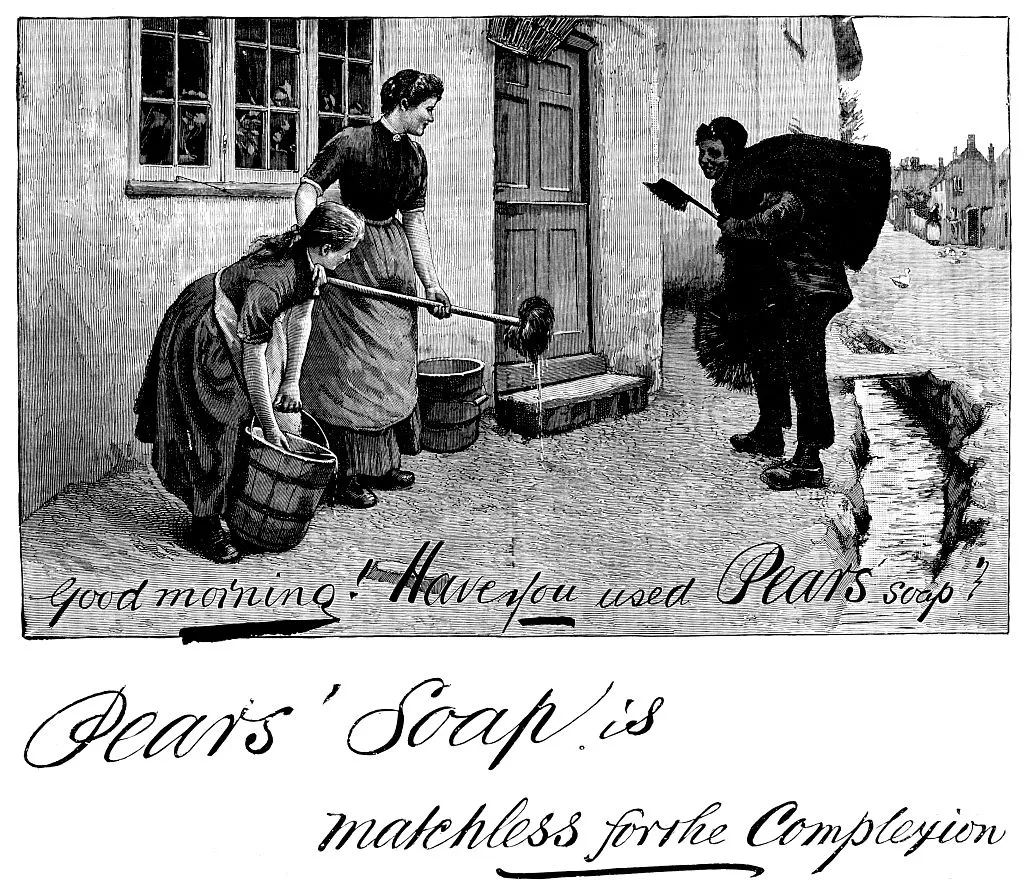
Advances in technology, health and the growing demands of the affluent middle class produced a windfall for companies that could capitalise on these trends. Forward-thinking business owners accelerated growth with pioneering marketing campaigns. Thomas J. Barratt, the chairman of Pears Soap, was one of the first executives to build a brand around an advertising campaign. Barratt has been called one of the fathers of modern advertising in London thanks to the campaigns he created in the first few years of the 20th century. Barratt sought to position Pears as one of the country's highest-quality soap brands. To do so, he created an advertising campaign to drive consumer purchases. One of his most memorable slogans was, “Good morning. Have you used Pears' soap?” He also ran a series of adverts featuring well-groomed middle-class children, linking the product to domestic comfort, high-society aspirations and daily cleanliness. Barratt's approach focused on aspiration and a strong, exclusive brand image, backed by a robust supply chain to meet demand.
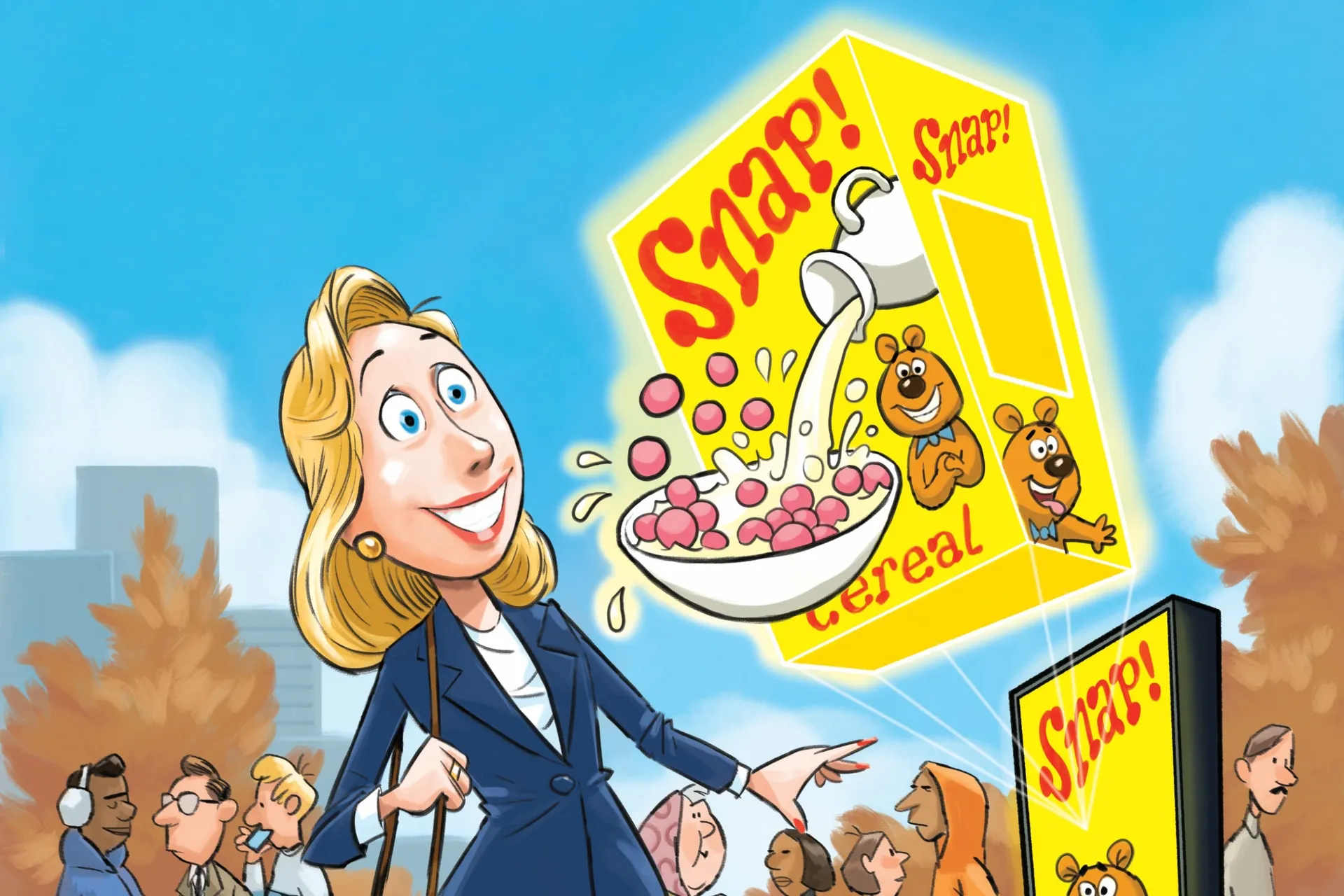
Companies were developing similar approaches across the pond. In the last decade of the 1800s, companies such as Procter & Gamble and Quaker Oats drove sales across the United States through national advertising campaigns. Tobacco producers were particularly prevalent in all markets.
Through the first few decades of the 1900s, the first global advertising agencies grew out of local offices. Advertisers began refining strategies across different media, such as print, radio and out-of-home billboards. In the 1920s, psychologists turned their attention to advertising, developing concepts of behaviourism and the consumer's basic emotions, such as love, hate, and fear, refining the strategies Barrett pioneered in London ten years earlier. Exploiting the insights of behavioural psychology became the calling card of one particular agency in Chicago: Lord and Thomas. Founded in 1873 and now known as FCB, it is the third-oldest advertising agency in the US still operating today. Albert Lasker bought the firm in 1912 and devised a copywriting technique that appealed directly to consumer psychology.
One of his most famous campaigns was for Lucky Strike cigarettes. The company wanted to encourage more women to smoke its cigarettes and so Lasker developed a series of ads encouraging women to smoke cigarettes rather than eating high-calorie snacks, using phrases such as “reach for a Lucky instead of a sweet”. The strategy helped Lucky Strike increase market share by more than 200% in its first year.

How the advertising industry became the money machine
Over the past 100 years, advertising spending has tracked global GDP growth. While spending is higher in some countries than others (the UK has the highest relative spend among major economies as a percentage of GDP), the global average has risen from roughly 0.3% of global GDP in the 2000s to around 0.8% today. According to WPP, that figure could hit 1% of global GDP by the end of the decade.
Despite this growth, the industry has often faced criticism for wasteful spending and poor returns on investment. One of the best-known criticisms of the industry is encapsulated in the quote: “I know that half the money I spend on advertising is wasted. My only problem is that I don't know which half” – a saying usually attributed to Henry Ford or the founder of Unilever and later the first Viscount Leverhulme. However, there's no evidence of either of these fathers of industry making such a comment. Ford was in fact highly committed to advertising, stating: “A man who stops advertising to save money is like a man who stops a clock to save time.”
The advertising industry has changed significantly since its early days, but the basic principles the early pioneers developed still apply. Advertising should be designed to capture attention and inform as directly as possible. Today, the industry can be divided into two parts. On the one hand, there are the businesses that sell space to advertisers. This market is dominated by the big four: Alphabet, owner of Google and YouTube; Meta, the owner of Facebook; ByteDance, the Chinese owner of TikTok; and Amazon. Together, these account for around 60% of global advertising revenue throughput, up from around 50% a few years ago. These are all digital-native or digital-dominant platforms that have leveraged their global exposure and creator content to build massive advertising operations. Outside these top four, the rest of the top 25 global advertising sellers include more traditional firms such as Fox, Walmart and JCDecaux.
The second part of the industry is made up of the agencies that design, plan and coordinate advertising across platforms. The biggest fish in this pond in the UK is WPP. Originally called Wire and Plastic Products, the company originally manufactured wire shopping baskets before it became an advertising holding company in the 1980s under the stewardship of Martin Sorrell. Today the group operates a sort of one-stop shop for companies and organisations that want to communicate their message to the outside world.
This process of coordinating campaigns and advertising spending is becoming increasingly challenging. We've long moved on from a world where advertisers only had to worry about painting signboards. Today, advertisers have a plethora of media to consider and the fastest-growing market is, unsurprisingly, generative search (AI). WPP Media's mid-year market forecast notes that advertising revenue on generative search platforms such as ChatGPT is expected to reach $5.1 billion globally in 2026, representing roughly 0.4% of total advertising revenue.
However, the media agency forecasts the market will grow at a compound annual growth rate of nearly 100% over the five years to 2031. This puts it on track to become the fastest advertising segment to reach $100 billion in annualised revenue in recent years. It took 22 years for traditional search (the adverts you might see when you search on Google) to reach this benchmark. It took 14 years for revenue on social media platforms such as Facebook to reach $100 billion, and spending on streaming TV platforms such as YouTube and Netflix has yet to exceed $60 billion annually, despite rapid consumption growth. The expansion of advertising on generative AI platforms is expected to drive much of the industry's growth in the coming years.

Billboards have not gone out of fashion
One medium seemingly benefiting from the growth of AI-based search is the so-called out-of-home advertising market. Out-of-home is one of the oldest forms of advertising. It generally refers to posters or signs located outside a user's property or premises, such as the ghost signs dotted across London. While spending on other forms of traditional media such as TV, print, and radio continues to decline, out-of-home spending is holding its own. According to WPP, that's because the medium is virtually guaranteed to deliver its message directly to humans, unlike digital platforms.
Indeed, earlier this year, we passed the point where more than half of the internet is now made up of machine-to-machine interactions (think AI agents filling in forms, or bots “liking” AI-generated videos), meaning there's an increasing chance human eyeballs will never see the ads that have been paid for. With out-of-home, advertisers can deliver their message to large numbers in physical environments simultaneously, the sort of scale and visibility that digital channels such as social-media platforms increasingly struggle to match.
One of the most prominent operators in this space in the UK is Global Media. The private company manages more than 253,000 outdoor advertising sites across the UK, as well as radio stations. It is one of the most important partners for the London Underground and operates billboards across some of the UK's most important transport hubs and across Europe. In the company's most recent fiscal year, out-of-home advertising revenue rose from £379.9 million to £425.9 million, and adjusted profits for the outdoor business rose 25% to roughly £155 million.

Alongside Global, JCDecaux (Paris: DEC) leads the world in this space. The Paris-based company accounts for around 12% of the global out-of-home advertising market, twice that of its closest competitor. Most of its assets are in Europe (30%), 8% in the US, 21% in the Asia-Pacific and 14% in the rest of the world. More than half of its revenue comes from out-of-home placements on the street, with 13% coming from billboard sales. In addition, 36% of sales come from adverts placed on public transport or around stations.
Analysts at Berenberg expect the company to grow 5.5% this year, faster than the wider market, thanks to growth in Asia and the US, which is underrepresented in the portfolio. While the company earns a healthy Ebitda margin of 21.4%, roughly 60% to 70% of group costs are fixed, meaning the capital structure has significant operational gearing. Still, the business is managed very conservatively, with near-zero debt and a 66% institutional shareholder in the form of the Decaux family. The shares trade at a forward p/e ratio of 15 with a free cash-flow yield of 7.3%.
The best advertising agencies to invest in
Then there are the advertising agencies. This market is really dominated by five major players: Publicis (Paris: PUB), WPP (LSE: WPP), Havas (Amsterdam: HAVAS), Omnicom (NYSE: OMC) and Dentsu (Tokyo: 4324).

Publicis is widely described as the best operator in the sector. Over the past five years, the company has won key contracts from competitors and poached top talent. It has focused on expanding its data and consumer-identity capabilities to gain an edge in the digital advertising market and capitalise on AI-driven market growth. Following a major restructuring and repositioning, growth is accelerating and is expected to rise from around 2.2% in 2026 to nearly 7% by 2028, according to Berenberg. The company is also generating strong cash flow. It is set to end 2026 with a net cash position of roughly €1.7 billion and the stock trades at a free cash-flow yield of 10.3% and a forward P/E of 11.
Once the leader of the group, WPP is now the laggard – and by a wide margin. Since the company lost its visionary CEO Martin Sorrell in 2018, it has really struggled to find its feet. Multiple rounds of job losses, re-organisations and rebranding have left the business gasping for air. Revenue this year is expected to come in at about £9.5 billion, down from £11.4 billion in 2024. However, following the arrival of new CEO Cindy Rose, green shoots have started to emerge. A year into her tenure and the former CEO of Microsoft UK has managed to stem the bleeding. According to numbers gathered by COMvergence, WPP Media has won around $3 billion in new business so far in 2026, versus $2.8 billion in losses last year. Account retention is now running at 43%, up from 16% in 2025. Still, the company has a lot of work to do to prove it is back in business. Analysts forecast revenue declines until 2028. In the meantime, the company is expected to cut jobs further to improve cash generation. It carries debt of around £2.5 billion, excluding leases, against Ebitda of £1.5 billion. A lot of bad news is baked into the valuation, with the shares trading at a forward p/e multiple of 4.9 and a dividend yield of 5.9%. The stock is trading at a free cash-flow yield of 5.2%.
Investing beyond the top tech players in advertising
The big tech players might dominate the ranks of the biggest advertising sellers, but they are no longer the pure-plays they once were. Alphabet, Meta and Amazon are funnelling hundreds of billions of dollars of advertising revenue back into the ground to expand their AI operations. This is turning businesses once touted for high returns on capital and asset-light models into capital-intensive infrastructure plays. Still, there's no denying they remain at the top of the pyramid for advertising spending. Alphabet, Meta and Amazon generated a combined $160.8 billion in advertising revenue in the second quarter of 2026, with Alphabet leading the way. Overall ad revenue rose 14.5% thanks primarily to the group's dominance in AI-powered search. Revenue from search rose 17%. YouTube advertising revenue rose 12.6% year on year as it continued to grab market share from TV budgets. The platform's annual advertising revenue has surpassed the combined spending of traditional legacy giants such as Disney, NBCUniversal, Paramount and Warner Bros. Discovery.

Beyond the top tech players, it may be worth a look at Pinterest (NYSE: PINS). This company has risen to become one of the top 25 advertising platforms in the world over the past decade thanks to its rich pool of ever-growing user content. Part social-media platform, part scrapbook, the platform is designed to help users find ideas, such as for home decor and fashion, and drive them to stores. More than half of the platform's users say they use it to shop. In a world where brands are focused on user-generated content to drive sales, this is a huge edge. The platform has logged 11 consecutive quarters of user growth (there are 640 million in total) and revenue expanded 18% in the second quarter. Pinterest has had a tough time as a public business, with the shares down 65% in the past five years. However, it's on track to generate around $1bn of free cash flow this year, against a market cap of $10.5 billion. It has net cash on the balance sheet and management has spent $2 billion buying back stock. It could be worth a look.
This article was first published in MoneyWeek's magazine. Enjoy exclusive early access to news, opinion and analysis from our team of financial experts with a MoneyWeek subscription.
Join more than 165,000 subscribers and keep yourself informed with the latest financial news, insights and expert analysis to help you understand what really matters when it comes to your finances.

Rupert is the former deputy digital editor of MoneyWeek. He's an active investor and has always been fascinated by the world of business and investing. His style has been heavily influenced by US investors Warren Buffett and Philip Carret. He is always looking for high-quality growth opportunities trading at a reasonable price, preferring cash generative businesses with strong balance sheets over blue-sky growth stocks.
Rupert has written for many UK and international publications including the Motley Fool, Gurufocus and ValueWalk, aimed at a range of readers; from the first timers to experienced high-net-worth individuals. Rupert has also founded and managed several businesses, including the New York-based hedge fund newsletter, Hidden Value Stocks. He has written over 20 ebooks and appeared as an expert commentator on the BBC World Service.