British schools are a success story – why are we doing so well?
British schools are among the best in the world when it comes to the educational skills of our 15-year-olds. England comes out particularly well. How did it all go so right?
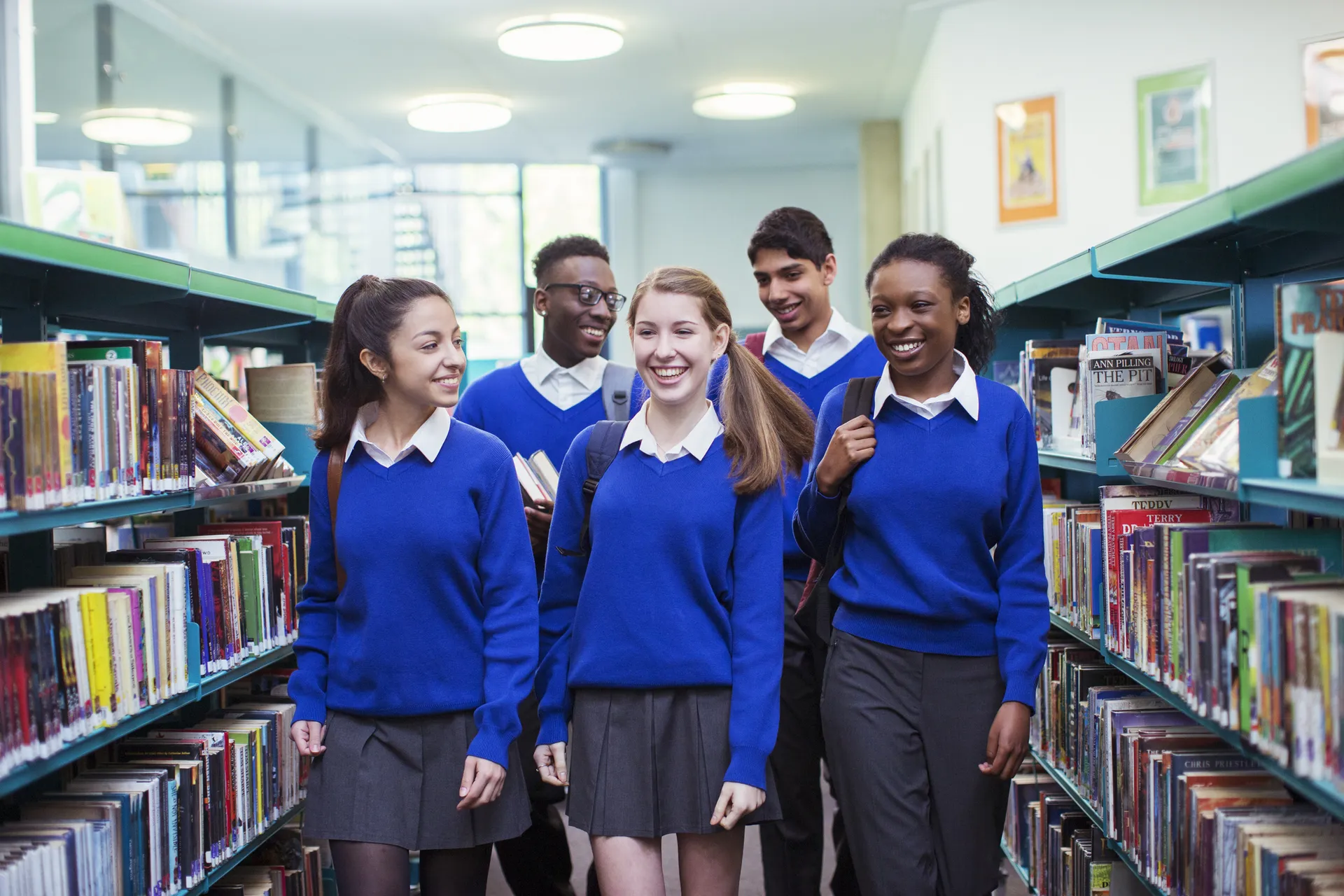
What's happening with British schools?
British schools – and English schools in particular – are doing remarkably well. Results from the OECD's 2025 Programme for International Student Assessment (PISA) were published earlier this month, and the UK is close to the top of the class among European peers.
The closely watched comparative survey, which began in 2000, is conducted every three years, assessing the educational skill levels of 15-year-olds around the world, with an emphasis on critical thinking, problem solving and the application of skills to real-world contexts. It now covers 91 rich and middle-income nations.
For the first time, the UK was in the top ten countries globally for each of the three subjects covered – reading, maths and science. The highest reaches of the combined league table are dominated by East Asian nations: China, Singapore, Macao, Taiwan and Japan are the top five; South Korea is seventh. Of countries outside that region, the UK, eighth in the table, lies behind only Estonia, ranked at number six.
Start your trial of MoneyWeek today
Get unparalleled financial insight, analysis and expert opinion you can profit from.

Sign up for MoneyWeek’s free twice-daily newsletter.
Join more than 165,000 subscribers and keep yourself informed with latest financial news, insights and expert analysis to help you understand what really matters when it comes to your finances.
Join more than 165,000 subscribers and keep yourself informed with latest financial news, insights and expert analysis to help you understand what really matters when it comes to your finances.
Are education standards rising globally?
No, most countries' results continued to decline, while in the UK they held steady in England, and only dropped a little in Scotland and Northern Ireland and a bit more in Wales (the exception being science, where they improved across the UK).
That flatlining doesn't necessarily take away from the UK's success. “Staying still, in the face of headwinds, while nearly everyone else drops back precipitously, is still an achievement,” says Sam Freedman on Substack.
But it obviously raises questions about what is going on globally, with potential factors including a pandemic hangover and decreasing levels of concentration in line with higher screen usage among children. In reading in particular, school pupils are struggling with skills such as interpreting information and assessing evidence, with an increase in “hasty reading” (quick but inaccurate). The OECD suggests this may be an effect of technological distraction and more reading happening on screens.
Is this good news for British schools?
Yes, and for England in particular. The PISA scores are also broken down in line with the separate school systems within the UK and show England now significantly outperforming Scotland and Northern Ireland, with Wales the weakest of the four. The results also show England has pulled further ahead since the last three-year PISA cycle compared with the rest of the UK, and with European peers more widely.
These striking results have been widely reported, says Freedman, but the extent of the gap between England and the rest of Western Europe has been underplayed. For example, in reading, the 25% most disadvantaged young people in England outperformed the average for all pupils in Germany, France, the Netherlands, Norway and many other countries. “The overall gap has gone from nothing to significant in a decade.”
Where did it all go right for England?
England's increasingly impressive record over the past decade has its roots in stable and sensible long-term policymaking under successive governments, says Iain Martin on Reaction – dating back to the creation of the national curriculum under Conservative education secretary Kenneth Baker in 1988. In the late 1990s and 2000s, the Blair governments did “fantastic work” expanding the Tories' reforms, sharpening teaching and giving schools more autonomy.
Then the coalition government, with Michael Gove as education secretary, “supercharged the raising of standards”. The basic planks of England's educational strategy are a curriculum focused on core knowledge, greater emphasis on behaviour, more high-stakes assessment, the use of synthetic phonics in early reading and a strong culture of professional development.
Is Britain’s old-school approach to learning paying dividends?
Indeed. England's model of curriculum and assessment is often “mischaracterised” as “rote-learning” and a “factory model” of schooling, says Freedman. Sceptics argue it might lead to good test results, but, compared with more modern “competency-based” approaches, is of little relevance to real life and less engaging for pupils.
Yet the PISA test results, which focus on creative problem-solving and critical thinking, are a big vote of confidence in England's education reforms. There are two other factors that may well have contributed to our success – namely a more sceptical attitude towards screen-learning and smartphones, and greater success at integrating the children of immigrants.
According to PISA, distraction from digital devices in class is far lower in England than most European countries. And in England, immigrants outperform non-immigrant 15-year-olds, whereas in France and Germany they lag far behind. That reflects greater success in integrating new arrivals.
What has Labour got planned?
Since coming back to power in 2024, Labour has passed the Children's Wellbeing and Schools Act 2026, which was concerned with free school meals, safeguarding and professional standards. This year, it has also announced an overhaul of SEND provision (for children with special educational needs and disabilities) in its Education for All Bill.
Alas, the new education secretary, Lucy Powell, is now making ominous noises about in effect copying the Scottish approach that has led to Scotland falling far behind England, says Fraser Nelson on Substack.
Powell says she wants to replace the “exam factory with the talent factory” – a very Nicola Sturgeon-like soundbite. She's proposed a broader curriculum and qualifications, fewer written examinations and more coursework and practical assessment, alongside “stepping-stone” qualifications for pupils who fail English or maths. “But why? The experiments have been done. The answers are in. Her way was pioneered by Scotland, and it leads over a cliff.”
This article was first published in MoneyWeek's magazine. Enjoy exclusive early access to news, opinion and analysis from our team of financial experts with a MoneyWeek subscription.
Join more than 165,000 subscribers and keep yourself informed with the latest financial news, insights and expert analysis to help you understand what really matters when it comes to your finances.